 1035 N Armando Street, Suite V, Anaheim, CA 92806



Past Events

SMPTE Hollywood Holiday Party at Canon Burbank
Thank You, SMPTE Hollywood Section and Canon Burbank, for an Amazing Holiday Party!


This year’s SMPTE Hollywood Section Holiday Party, hosted in collaboration with Canon Burbank, was a fantastic celebration of the season. It was an excellent opportunity to reconnect with industry friends, make new connections, and celebrate the past year’s achievements.
The highlight of the evening was mingling with professionals from all areas of entertainment and technology. It was inspiring to exchange ideas and perspectives with such a diverse group of passionate individuals, from cinematographers to editors. The event served as a wonderful reminder of the value of networking and building relationships that foster growth in both personal and professional spheres.
Of course, no holiday event is complete without great food and drinks, and this party certainly didn’t disappoint. The delicious spread and open bar perfectly complemented the lively atmosphere. The raffle at the end added more fun to the evening, making it even more memorable.
Thank you to SMPTE Hollywood Section and Canon Burbank for organizing such a fantastic event. We don’t celebrate with our peers in such a festive and laid-back environment every day. Your attention to detail and commitment to creating an inclusive and engaging experience made this celebration special.
As the year wraps up, I’m grateful for the connections made and the memories created. Thanks again for a fantastic holiday party, and here’s to more opportunities to collaborate and celebrate in the year ahead!

Unlock the Best of NAB 2024: Live Video Production, Broadcasting, Private 5G, Wireless, IPTV, Digital Signage & Streaming
See what you missed from VidOvation and our partners Haivision, ABonAir, Advanced Image Robotics, AJA, Alvalink, Apantac, BirdDog, Celona, Cobalt Digital, Cyanview, DirecTV, Dream Chip, Grass Valley, For-A, MultiDyne, Peplink, Providius, Ross Video, Thor, Videon, Vislink at NAB 2024
See what you missed at the NAB show from VidOvation. The event offered a wealth of educational and informative content for broadcasters, production companies, and AV professionals. If you’re interested in exploring innovative live video production techniques, this event is an excellent opportunity for you to do so. You’ll learn about the benefits of implementing at-home, REMI, and cloud services, which can help you streamline your workflow and reduce costs.
In addition to these topics, the event will also cover broadcasting, wireless, private 5G, IPTV, digital signage, and streaming systems, which are all critically important tools that can benefit your business. If you’re looking to integrate these technologies into your operations, the NAB show’s team of experts will be on hand to help you. They’ll work with you to understand the specific needs of your business and recommend the solutions that will work best for you.
The experts will also be able to discuss any critical challenges that you may face and provide you with practical advice on how to overcome them. By attending this event, you’ll be able to seize new opportunities and stay ahead of the curve in this rapidly evolving industry.
- Implement at-home remote production (REMI) without headaches.
- Create more live content while cutting costs.
- Establish frame-accurate genlock and lip-sync across multiple untethered cameras.
- Ensure legal compliance in your in-house IPTV and digital signage system.
- Leverage industry-approved Verimatrix or Pro:Idiom DRM and encryption.
- Integrate a custom TV distribution system into your existing infrastructure.
- Eliminate cabling clutter with wireless video, audio, and data links.
- Unleash the Power of Private 5G Wireless for Large-Scale Facilities and Venues
- Deploy robust ultra-low latency, bidirectional radio with dynamic FEC & ARQ with fully integrated intercom and camera control.
Our company takes pride in its exceptional team of experts who are committed to providing the best guidance and support for your upcoming project. Our team comprises highly experienced professionals who possess the necessary knowledge and skills to deliver the right solutions to your project’s challenges.
We understand that every project is unique, and we value the importance of discussing the intricate details of your project to ensure its success. That’s why we are excited to schedule a meeting with you to discuss your project in detail.
We invite you to use my calendar link to choose a convenient date and time for our meeting. During the meeting, we will discuss your project’s specifications, requirements, and goals to provide you with tailored solutions and recommendations.
Our team is eager to hear from you and committed to working with you throughout your project’s journey to ensure its success. We look forward to hearing from you soon!


VidOvation and Celona Unleash the Power of Private Wireless for Large-Scale Facilities and Venues
Using VidOvation Bonded Cellular Technology, Celona’s 5G LANs Combine With Carrier LTE/5G to Enhance Wireless Performance and Reliability
Private 5G CBRS Video Networking from VidOvation: NAB 2024’s Product of the Year Winner
-


- Celona Private 5G


-


- NAB Product of the Year Winner
VidOvation announced it has partnered with Celona, an innovator and pioneer of enterprise private wireless systems, to deliver large venues and facilities new levels of wireless performance, connectivity, and coverage that enable a myriad of innovative applications and use cases — from automated entry access to improved indoor public cellular connectivity. The private wireless solution combines VidOvation’s bonded cellular technology with Celona’s 5G LAN system utilizing shared cellular spectrum. This streamlines critical operational bottlenecks by overcoming long-standing performance, mobility, and coverage issues associated with conventional wireless technology. The solution solves coverage gaps, erratic performance, and overutilization, which have long inhibited large-scale facilities, stadiums, and entertainment venues from improving the experience of fans, visitors, and vendors.
Using Celona’s private 5G LAN technology that leverages new private cellular spectrum within the 3.55 to 3.5 GHz (band 48) with VidOvation’s bonded cellular, customers can now dramatically improve the coverage, performance, and reliability of their wireless infrastructure across a much greater area at a lower cost than conventional alternatives.
“Reliable and deterministic wireless connectivity is no longer negotiable for many venues and organizations,” said Jim Jachetta, executive vice president and CTO at VidOvation. “Wi-Fi was never engineered for large indoor or outdoor spaces. We see private 4G/5G as a game changer in these environments and much better suited for network-dependent applications, which are now the norm. As an authorized Celona solution provider, we can help organizations future-proof their networks with private 5G today, ensuring enhanced connectivity for their staff, guests, devices, and mission-critical projects.”
VidOvation is reselling Celona’s entire turnkey private 5G LAN system, an all-in-one solution that seamlessly integrates private LTE/CBRS into existing enterprise L2/L3 networks. Building on VidOvation’s bonded cellular technology, using multiple cellular modems to combine 4G, LTE, and 5G to boost connectivity, the joint solution ensures that when carrier networks become overwhelmed, bonded cellular users automatically switch to private LTE/CBRS with dedicated bandwidth.In addition to providing lower latency than standard traditional Wi-Fi networks, with more than 10 times the coverage and up to four times the speed, Celona’s 5G LAN technology uses SIM authentication for enhanced security, thereby addressing common Wi-Fi pain points related to interference, bandwidth, and security.
Celona’s 5G LAN system is a fully integrated wireless solution that can be deployed, much like a Wi-Fi LAN, in a matter of hours. 4G or 5G cellular access points connect directly to existing enterprise LAN cabling and are mounted where coverage is needed. The all-inclusive solution includes 4G/5G indoor or outdoor access points, edge software, cloud-based orchestration, and SIM or eSIMs for device connectivity. Even when legacy devices already deployed at a facility lack native support for private LTE, VidOvation can help bridge the gap, integrating third-party devices with Peplink routers to ensure seamless connectivity to 5G networks.
“Private wireless is no longer a nice to have for business-critical operations that require deterministic wireless connectivity and performance,” said Rob Mustarde, VP of Global Sales at Celona. “We look forward to working with VidOvation, a leading solution provider in this space, to simplify and expand implementation of this forward-looking wireless connectivity model.”


VidOlink Reacher II Family of Professional Wireless Video, Audio, Intercom, and Tally Links
VidOlink Reacher II Family NAB 2023 Product of the Year Award Winner
A cost-effective wireless video transmitter and receiver could be the solution to your acquisition, contribution, and distribution of HD video. This will help you eliminate those cables lying around while ensuring the highest quality of your output. It will eliminate the clutter of cables, making it easier to set up a wireless production set.
Running cables might still be a way many individuals do business, but it can be inconvenient. Wireless products are very convenient and easy to set up because you don’t have to run long wires around.
These devices have increased flexibility because the wireless receiver can be moved around easily without needing to install new wires or re-route old ones. Your crew can move around at any distance and enable you to create a safe environment since there is nothing to trip over.
Regardless of the industry, you are in, a long range of these wireless products will ensure a seamless relay of recording from one point source to another or to multiple points all at once. This eliminates the usually long set and configuration process since the transmitter and receiver will automatically detect each other and connect.
Our team at VidOvation recommends these products with proven quality and benefits to our customers. Our solutions aim to remove the frustrations of signal loss, latency, interference, noise, and security issues.
VidOvation excels in helping its clients integrate custom solutions into existing infrastructure, with the ability to satisfy almost any application or budget. Our company applies proven expertise to the complete project life cycle — from project consulting and management to engineering and design, to warranty and support.
Learn how Paramount / ViacomCBS Reduces Costs by Keeping an Eye on the Production Floor With IPTV from VidOvation

By using VidOvation IPTV to deliver live internal studio feeds, DirecTV, and playout of its own content, Paramount / ViacomCBS can monitor quality control during production and distribution.
In this training session, attendees will learn how to design a successful, impressive, cost-effective IPTV and digital signage system that suits your unique requirements and budget, including:
- How to stream live video off-site to remote customers and employees working at home
- What’s needed to successfully implement and support live TV distribution to every device – Smart TVs, set-top boxes, smartphones, tablets, computer desktops, and more
- Learn how to distribute live television from DirecTV, Dish Network, cable, Over-The-Air TV, internal live feeds, studio feeds, and more
- Connect your Master Control Routing Switch outputs to the IPTV system for distribution across the enterprise.
- How to integrate a video-on-demand capability and full, multiplatform content library
- How to identify red flags and avoid the top costly project mistakes
- Digital Rights Management (DRM) related legal issues at stake
- Fully integrated Digital Signage with the VidOvation IPTV system or the integration of virtually any third-party digital signage or media player.
Haivision / Haivision to Showcase Innovations in Cloud, IP, and 5G Video Streaming

Experience the Future of Live Broadcast
Join Haivision experts to discover its comprehensive and innovative IP, cloud, and mobile broadcast video solutions and the latest technologies for remote production workflows in live sports, news, and entertainment.
Get an up-close look at Haivision’s high-performance video contribution and distribution solutions, including:
Game-Changing 5G contribution

Discover the latest 4K/UHD bonded cellular technology for broadcasting live events from anywhere, including an exciting new addition to our solutions portfolio. Powered by both SRT and SST protocols, the best-in-class Pro460 and the versatile StreamHub offer the greatest workflow flexibility and the lowest end-to-end latency over 5G networks.

 Decentralized Remote Production
Cover more events at higher quality, and lower costs with the Makito X4 low latency video encoders and decoders. Broadcast all the angles with multi-camera synchronization, contribute to on-premise or cloud workflows, and collaborate seamlessly with decentralized teams.

 Future-Proof Cloud Workflows
Leverage our new cloud technology for intuitive central management of all live streams, transcodes, and routing workflows. Streamline your operations and simplify your workflow orchestration by remotely managing all your mobile transmitters and wired video devices.
Coming soon: New cloud solution will be announced!
At this year’s IBC we will share our vision for the future of broadcast contribution. Following our acquisition of Haivision, our remote production solutions portfolio is more extensive and powerful than ever. We are excited to meet with our customers face to face to demonstrate how they can benefit from our latest cloud, IP and 5G innovations and our expanded live video contribution product portfolio to make live broadcasting easier, sustainable, and cost-effective.
Ghislain Colette, Vice President of Product Management, Broadcast at Haivision
Emmy Award-Winning Technology
The world’s leading broadcasters trust Haivision’s video streaming and encoding solutions for high quality, low latency contribution, and distribution workflows.

2022 Emmy® Award for Technology and Engineering
National Academy of Television Arts & Sciences

Streaming Media Readers’ Choice Awards 2021-2016

Top Companies in Online Video 2021
Companies that Matter Most in Online Video
VidOvation provides live video production, cloud services, broadcasting, IPTV, digital signage, and streaming systems that simplify your workflow and save costs. Expect at-home remote production (REMI) without headaches. Create more Live Content while saving costs. Demand frame-accurate genlock & lip-sync across multiple untethered cameras. Ensure legal compliance in your in-house IPTV & digital signage system. Expect industry-approved Verimatrix or Pro:Idiom DRM & encryption. Integrate a custom TV distribution system into your existing infrastructure. Eliminate the clutter of cabling with wireless video, audio & data links. Demand a robust ultra-low latency, bi-directional radio with dynamic FEC & ARQ with fully integrated intercom & camera control. Encompassing Emmy award-winning bonded cellular, wireless video, video streaming, video over IP, encoding, IP probing, monitoring & multiviewer, enterprise IPTV, Verimatrix & Pro:Idiom digital rights management (DRM) & encryption, digital signage, and fiber-optic communications systems, VidOvation solutions improve video transmissions by removing the frustrations of signal loss, latency, interference, noise, and security issues. In addition to VidOvation manufactured products, we also represent great brands such as ABonAir, Haivision, Cobalt Digital, Haivision, Mobile Viewpoint, MultiDyne Fiber, SimplyLive, Technicolor, Vislink, and more.
Product Catagories Include:
- Capitalize > Connected TV / OTT / Hybrid / IPTV
- Capitalize > Digital Signage (Hardware and Software)
- Capitalize > Streaming Media Devices
- Connect > 5G
- Connect > Cloud Computing
- Connect > Encoding
- Connect > Microwave / RF Accessories
- Connect > RF Transmission
- Create > Cameras and Lenses
- Create > Intercoms
- Create > Mobile / Vehicle Production
- Create > Motion Picture / Film Production
- Create > Switchers: Production
- Create > Television / Video Production
- Intelligent Content > Vision AI

The Rise of Private 5G: A Challenger to Wi-Fi and Public 5G for Mobile Transmitters & Encoders [NAB BEIT Paper & Webinar]
Summary:
This paper examines how private 5G networks challenge traditional Wi-Fi and public 5G for video streaming and wireless connectivity dominance.
Description: The paper explores the emergence of private 5G networks as a significant player in the field of wireless connectivity. In an era characterized by increasing demand for high-speed, reliable internet and wireless connectivity, this paper examines how private 5G networks are poised to challenge the dominance of both traditional Wi-Fi and public 5G networks.
The paper begins by providing an overview of the current landscape of wireless communication technologies, highlighting the strengths and limitations of Wi-Fi and public 5G networks. It then delves into the concept of private 5G networks, explaining how they differ from their public counterparts and why organizations are increasingly adopting them.
Key points covered in the paper include:
Private 5G Networks Defined: The paper defines private 5G networks and their operation within dedicated, organization-specific infrastructure. It discusses their potential applications across various industries, including broadcasting, streaming, manufacturing, healthcare, logistics, and smart cities.
Benefits and Advantages: The author outlines the advantages of private 5G networks, such as low latency, high reliability, security, and the ability to customize network settings to suit specific business needs. Case studies and real-world examples illustrate the benefits.
Challenges and Considerations: The paper also addresses the challenges and considerations organizations must consider when deploying private 5G networks, including spectrum allocation, regulatory compliance, and initial setup costs.
Competition with Wi-Fi and Public 5G: The paper’s core focus is to highlight how private 5G networks challenge traditional Wi-Fi and public 5G and discuss scenarios where they may outperform or complement existing technologies.
Future Outlook: The paper concludes by offering insights into the future of private 5G networks and their potential impact on the telecommunications industry. It discusses the role of standardization and the evolving ecosystem of private 5G solutions.
In summary, “The Rise of Private 5G: A Challenger to Wi-Fi and Public 5G” comprehensively explores the growing significance of private 5G networks. It offers valuable insights for businesses and policymakers considering the adoption of private 5G as a viable alternative to traditional Wi-Fi and public 5G, emphasizing the transformative potential of this emerging technology in various sectors.
Get the paper, presentation & watch the webinar by completing the form below:
-
- NAB Product of the Year Winner
-
- Celona Private 5G
-


- Haivision 5G Mobile Bonded Cellular Encoders
Detailed Summary
Introduction to Private 5G (0:06 – 17:35):
Jim Jachetta, CTO and co-founder of VidOvation discussed the emergence of private 5G networks as a contender against Wi-Fi and public 5G. He outlined the challenges faced in large venues like stadiums, warehouses, and factories due to interference in Wi-Fi networks. Public 5G, while effective, sometimes falls short, leading to the introduction of private 5G networks. Private 5G operates on Band 48, known as Citizens Broadband Radio Service (CBRS), providing more reliable spectrum without the regulatory constraints of licensed or unlicensed spectrum. Private 5G offers interference-free connectivity, is managed by the FCC, and utilizes a shared spectrum where hardware approval is necessary. The network operates in three tiers, with the third tier catering to enterprises and broadcasters.
Integration and Deployment (6:23 – 10:17):
Integration of private 5G is relatively simple, requiring 5G-enabled devices and access points tied to SIM cards. Various devices, including tablets, cell phones, and routers, can be made compatible with private 5G using dongles. The network infrastructure includes indoor and outdoor access points, an edge server for management, and a cloud orchestrator connected to a spectrum access server (SAS). Professional certified installers are essential for deployment, ensuring compliance and access to spectrum slices.
Use Cases and Benefits (11:19 – 17:35):
Private 5G finds applications in broadcast media, sports, and industries requiring resilient wireless connections. Use cases include large outdoor spaces like refineries, construction sites, and warehouses, where reliable connectivity is crucial for robotics, automation, and safety systems. Private 5G complements Wi-Fi and public 5G, offering benefits such as reduced infrastructure costs, lower latency, and deterministic connectivity. It enables customized slices of spectrum for different services, ensuring efficient bandwidth allocation and security, with the added advantage of cost-effective data streaming compared to public cellular networks.
Private 5G Deployment and Comparison (17:35 – 32:25):
Jim explains the flexibility of private 5G deployment, which can be permanently installed or easily moved to different locations, making it suitable for road crews or temporary setups. He emphasizes that while private 5G and enterprise Wi-Fi can coexist, each has its advantages. Private 5G excels in large open spaces but may not penetrate office environments as effectively as Wi-Fi due to building structures. However, private 5G offers predictable performance, larger coverage areas, and supports critical applications. It can be as easy to set up as Wi-Fi, especially with the right partners, and both technologies can operate side by side on different bands.
Jim clarifies the distinction between 5G and Wi-Fi frequencies, highlighting that 5G operates in megahertz slices within the CBRS band, providing significant throughput potential despite the seemingly limited spectrum. He discusses the coordination of spectrum slices, ensuring fair distribution among users, as demonstrated in events like the King Charles coordination. He also mentions real-world applications of private 5G in sports leagues like the NFL and NHL, emphasizing its practical implementation beyond theoretical discussions.
Advantages and Future Outlook (32:26 – 32:50):
Jim enumerates the key advantages of private 5G, including lower latency, higher bandwidth, and support for critical applications like streaming and cloud computing. He underscores the importance of private 5G in enhancing reliability and reducing latency for mission-critical workflows. Additionally, he highlights the availability of various devices and adapters compatible with private 5G, catering to different user needs and legacy systems.
Jim predicts the coexistence of private 5G, Wi-Fi, and public 5G for the next decade or two, similar to the transition from 3G to 4G. He emphasizes the ongoing relevance of 4G and the gradual integration of private 5G into various industries and global deployments. This indicates a sustained demand for private 5G solutions and its continued evolution alongside existing wireless technologies.
Future Outlook and Conclusion (32:51 – 37:53):
Jim concludes by emphasizing the continued coexistence of private 5G, Wi-Fi, and public 5G for the foreseeable future, with each technology serving specific needs and applications. He mentions Wi-Fi’s expansion into the six gigahertz band to alleviate congestion. He predicts significant growth in the private 4G and 5G market, potentially reaching $8 billion by 2027, according to industry analysts. Jim expresses his desire for Vitovation to be part of this growth and highlights private 5G as an additional tool for broadcast media, news, and sports industries.
In his summary, Jim outlines the primary application of private 5G for large indoor and outdoor open venues, where line of sight or near line of sight is prevalent. He underscores the benefits of lower latency, lower cost due to fewer access points required, higher reliability, managed SLAs, and enhanced security. Jim highlights how private 5G can improve the experience for staff and visitors, enhance communication, and ensure business continuity in scenarios like concession sales at stadiums.
Jim concludes by inviting further engagement, providing contact information for inquiries and allowing attendees to access additional resources related to the presentation. He encourages feedback on the format of the solo show and expresses his willingness to do more of such presentations in the future.
Webinar Transcript
Hello, I’m Jim Jachetta, a CTO and co-founder of VidOvation. I recently gave a speech and presented a paper at the NAB BEIT conference. I spoke about the rise of private 5G, a challenger to Wi-Fi, and the public 5G for mobile transcoders.
So let me discuss, let’s dive in. So, just an introduction. So, overview of Wi-Fi and public 5G usage.
So, we all are very familiar with Wi-Fi and public 5G, or another name for it is mobile network operator, or MNO, you know, your Verizon, AT&T, and T-Mobile. Some of the challenges we face in large venues, indoors and outdoors, like stadiums, football fields, soccer fields, baseball stadiums, fairgrounds, large warehouses, factories, piers, docks, etc. You know, Wi-Fi is great because it’s unlicensed, but we’re susceptible to interference from other operators or other access points.
Public 5G works pretty well. We have Verizon, AT&T, and T-Mobile. We bond all those carriers together to get good throughput, but there are those cases where the public 5G is not enough and we need something different.
So, here comes private 5G. Private 5G is we’re setting up our own cellular network that no one else can operate on. It belongs just to us.
We’re given a slice of spectrum, and that spectrum belongs to us for our uses. So, what is private 5G, or what is a private 5G network? So, basically, it operates on what is known as Band 48, or the Citizens Broadband Radio Service, CBRS for short, because we need more acronyms in our industry, three-letter, four-letter. So, Citizens Broadband Radio Service, CBRS.
So, what does it give us? Well, it gives us a more reliable spectrum. So, it’s kind of like license implies there’s a fee. So, there’s no fees to use CBRS or private 5G.
Unlicensed indicates little or no regulation. It’s a free-for-all Wild West. So, you’re in a public area, a densely populated area, access points from adjacent buildings, adjacent businesses, fans in a stadium, the Wi-Fi and the fan next to you were all interfering with each other.
So, the shared spectrum, it’s called shared spectrum, and it’s managed by the FCC. So, you’re only given a slice if your hardware meets approval and if there’s a slice available. If there is no slice available, you cannot get a slice and interfere with someone else.
So, there’s three different tiers. The first tier is the US Navy or the incumbents. Some fixed satellite services use the band.
That’s being phased out. Tier number two is your MNOs, your priority access licensees. In this case, Verizon, AT&T, T-Mobile, or another telecom entity is actually paid for a slice permanently.
So, we don’t have access to that. So, us folks in the broadcast television media or enterprise space, we would be in the third tier. And in most circumstances, most applications, there’s plenty of slices to go around.
Private 5G has not been proliferated like Wi-Fi. So, we’ll always have a band or we should have a band available to us. And it’s more secure.
It offers no interference. So, no one can step on us. No one can interfere with us.
And many, many devices now, if a device is 5G enabled, more than likely, it supports band 48 or that CBRS band. So, more devices, most 5G devices have support. So, what does the integration look like? What is the private 5G? You know, people start to think, is this expensive? Is it complicated? It’s really very, very simple.
Or at least from Vitovation’s perspective, with the partners we use, such as Solona, it’s very, very simple. So, here on the left, we have our devices. So, they have to be 5G enabled.
Some 4G devices also support band 48. So, it’s 4G, 5G. And you can buy iPads, Microsoft Surface tablets, cell phones, radios, routers, point of sale cash registers, you name it.
A device can be purchased with a 5G modem in it, or we can provide a little dongle to make it 5G enabled or private 5G enabled. Then there is a SIM that is tied to an access point. So, the SIM protects us, gives us an added level of security.
You can only connect to the private 5G network if you have the proper SIM. We also support eSIM, so you don’t have to have a physical SIM. And you can see here, there’s 4G LTE, there’s 5G, there’s indoor, there’s outdoor access points, and they look almost identical to a Wi-Fi access point.
They can coexist on the same infrastructure as your Wi-Fi. We recommend you put the private 5G access points on their own VLAN. And then there’s an edge server which connects to the access points.
It manages, it enables them. In other words, are we legal to operate in private 5G where we are? It also does firmware updates, etc. And the edge server also then connects to the cloud, the orchestrator, as we call it.
And the orchestrator is what goes out to the spectrum access server, as we call it, or SAS, another acronym. Spectrum access server to see if there is a slice of spectrum available at our GPS coordinates or at the address that we are located. So the spectrum access server keeps track of who’s using what slices of private 5G throughout the United States.
And there’s similar mechanisms in other countries. So the access point, the edge server, and the cloud orchestrator all play together to help manage the private 5G or CBRS network. Now, who’s allowed to roll this technology out? You need to be a professional certified installer, yet another acronym, PCI, professional certified installer.
So when you have your CPI credentials, then you’re allowed to upload your credentials into orchestrator. Then it knows, okay, Jim Jeketa has taken the test. It’s eight or 16 hours, depending upon your prerequisites of training you have to take.
And then you get a digital certificate, which you upload. And then you can access the software, I’m sorry, the spectrum access server or SAS server to see if a slice is available for you or one of your clients. So here’s another way of looking at it, just a different view.
You know, SIMs and the endpoint devices here on the left, access points, indoor, outdoor, 4G, 5G, edge server in the middle, and then orchestrator up in the cloud. The edge server bridges the on-prem with the cloud. So what are the use cases? So, you know, Vinnovation is promoting 4G, 5G, private, private 4G, 5G, CBRS for broadcast media, sports news, et cetera, as a companion to some of the bonded cellular or mobile transmitter encoders that we provide.
But the technology was rolled out simply for large outdoor spaces like an oil refinery, a shipping yard, a freight, a rail yard, construction sites, a quarry, et cetera. You can see some of the pictures, warehousing, robots and automation in warehouses or factories, train stations, convention centers, et cetera. And you can imagine if we have robotics in these different areas, if they lose connection with their controlling computers or their controllers, or they lose Wi-Fi connectivity, that could be pretty serious.
Hopefully the robot will just turn off, but robot could run a ride, not receive commands or commands, get garbled. So you can see the importance of having a resilient and reliable wireless connections in some of these applications. So, again, it’s private 5G, private 4G.
It’s not going to take over Wi-Fi. Wi-Fi is probably going to be here for decades to come. The public 4G, 5G, the MNO, Verizon AT&T and T-Mobile, that’s not going away anytime soon.
The three technologies can work side by side. And we demoed this in our booth at NAB. We had a high vision Pro 460 mobile transmitter encoder, and we were connected to Wi-Fi, public cellular and private simultaneously and bonded all of that together.
So what’s the benefits? So in a corporate environment or in its most common use case, you can cut down your Wi-Fi access points by 10 or 20 fold. So, in other words, if we had a large convention center and you had a hall that needed 10 or 20 Wi-Fi access points, you could put one private 5G access points and replace all of that. Now, granted, the machinery and telemetry and sensors and cameras you’re controlling need to be able to connect to private 5G.
But if they’re legacy, we can provide adapters, bridges from WAN or IP, traditional Ethernet to public 4G, 5G. And some of these devices come from our partners such as Peplink and others. There’s a big reduction because we need far less access points.
There’s a capex reduction of about 40% when we compare Wi-Fi to private 5G. And then as we all know, public 5G or MNO, Verizon, AT&T and T-Mobile, when we’re streaming video, there’s a fee associated with it. The cellular data, it averages about $10 a gig.
And a five megabit per second stream needs about a little over three gigabytes of data per hour to stream. So that can add up very quickly. So if we set up a private 5G network, we can connect that to our facility’s Internet connection to stream out.
And that Internet connection has an unlimited pipe or virtually unlimited pipe. It’s far less expensive than public or MNO data from Verizon, AT&T or T-Mobile. So you can see the benefits there.
So again, this little wheel here kind of summarizes things. So we get interference-free spectrum. I forgot one important thing, low latency.
One of the drawbacks of MNO or public 4G, 5G is the latency. A typical connection is anywhere from 40 to 60 milliseconds in a good day. But that can spike up.
You see the latency spike up and down in our bonded cellular transmissions. With private 5G, we can get the latency down to single digits, less than 10 milliseconds, five, six milliseconds or better. So you can see the benefit there.
Then deterministic connectivity, what does that mean? Within our slice of spectrum, we can set micro-slices. So in other words, take a ballpark, for example. Maybe there’s a slice for the broadcast, you know, for video streaming of the game.
But then point of sale, security cameras, life safety, PA systems, fire, rescue, et cetera, police, security. All these different departments or all these functions can have a different slice. And a slice is kind of analogous to a quality of service.
So we can give each person a slice or even like a VLAN. They can get their own VLAN of bandwidth. This way, the broadcast media folks can’t hog the whole private 5G pipe.
Because if there’s a life safety or point of sale transaction happening, that would be bad. The fan can’t buy their beer at the concession stand because the private 5G network is being overutilized by another service. So we can manage this whole process and orchestrate it.
We get stronger security than the traditional wireless. The stream is secure. The SIM also helps with that security capability.
And the technology can be permanently installed or it can be moved around. You know, if we’re a road crew moving this private 5G capability from, you know, New York, L.A. for sports, we can light it up in different cities, put our GPS coordinates in our address, and find out if there’s a slice available to us in different locations. So it’s quite flexible in that regard.
So I kind of mentioned this. So private 5G versus enterprise Wi-Fi. As I said earlier, both can coexist.
Each has its different advantages. Now, a private 5G system would not work in an office with offices, cubicles, carpeting, etc. You know, you’re going to need more of a Wi-Fi footprint, a Wi-Fi access in each room or in each area.
Private 5G may not be able to go through all the walls in an office environment. So large out, you know, think of large open spaces is where it thrives. Enterprise Wi-Fi is very easy to set up.
It’s affordable. Private 5G gives us predictable performance, larger coverage areas, and supports critical applications. But, you know, private 5G, if you have a partner like Vitovation setting it up for you, it can be just as easy as Wi-Fi.
And the two technologies can work side by side. You could have a Wi-Fi access point right next to a private 5G access point in your facility, and the two are on different bands. They can even share the same network connection.
The private, like a Wi-Fi access point, the private 5G access point uses power over Ethernet. So the unit comes with a PoE+++, a powerful power injector that goes in the line, you know, it injects power into the LAN connection. So, and then the architecture that we provide or the orchestration tools in the edge server make for a simple integration and make for easy management.
What I said, I set up our private 5G system at NAB. It literally took me less than 15 minutes to do so. If I can do it, anybody can do it.
So how does the 5G work? So, you know, 5G, as we all know, is a fifth generation cellular. It’s a common misconception. People confuse 5G with five gigahertz.
Five gigahertz is the Wi-Fi band. Now Wi-Fi is going up into the six gigahertz range. 5G has nothing to do with five gigahertz.
Same thing with 4G. It’s the fourth generation cellular technology. So, how does Wi-Fi work compared to the private 5G? So private 5G, we get a 10 to 40 megahertz.
So there’s slices in 10 megahertz chunks. The CBRS band on our prior slide showed us 150 megahertz. Doesn’t sound like that much spectrum, but we’re given anywhere from one to four slices.
So we’ll get 10 to 40 megahertz of a slice. Now cellular uses complex, you know, COFDM, quadrature modulation, where we can get in that 10, 20, 30, or 40 megahertz slice, we can get two or 300 megabits per second upload and download through that spectrum. So we can put quite a bit of throughput into that little slice that we’re given.
And, you know, the slices are 10 megahertz each, and it’s 150 megahertz wide. There’s 15 slices to go around. So in a more congested area, you might only be given one slice.
Or one, if it’s an event, we can even do frequency coordination, where a primary vendor comes in, grabs as much of the CBR spectrum as we can, and then we give ABC, CBS, CBS, CNN, Fox News Channel, a slice within that spectrum. So there’s ways to manage the spectrum so everyone gets a slice. And that was done at the King Charles coordination.
A primary vendor came in with private 5G CBRS capability, and they gave each participating network a slice. And it worked really, really well. It really worked well.
So the NFL is using this technology. The NHL has rolled out some private 5G capabilities. So this is not just theoretical or hypothetical.
This has been in use for quite a while, and it’s sure to grow very soon. So comparing private 5G versus Wi-Fi. Better security with SIM authentication.
5G supports higher density. We can provide scheduled access. We can have a larger coverage area with less infrastructure than Wi-Fi.
You know, that 10 to 1, 20 to 1 when it comes to access points. Private 5G provides smoother handoff and better reliability for mobile devices. Now, that’s very important when we’re streaming.
So we’ve done applications where we’ll have a long race, and we may need several private 5G access points around a very long racetrack. And if we’re in a chase vehicle or we’re doing or there are cameras in the race car or going with the bicycles, whatever kind of race it might be, we need to hand off from tower to tower, from access point to access point, like when you’re making a phone call. You know, in the early days of cellular, when it didn’t work very well, when you’re in the car, if you went out of the range of one tower, the call would drop.
But, you know, the way relatively seamlessly today you can make a phone call continuously as your cell phone jumps from tower to tower to tower. So not all private 5G technology is the same. There are some inferior systems out there that don’t hand off very well.
And we’ve seen some of that in action. So lower latency, you know, I mentioned, you know, single digits less than 10 milliseconds. So, you know, under 20 milliseconds round trip or 10 milliseconds each way is more the norm.
Bandwidth, you know, depending upon the setup, you know, we can get up to a gig data transfer up and down. So you can see how important this is for critical applications such as streaming, broadcast streaming and media. So private 5G.
So, you know, we’re providing this solution for the enterprise, for the broadcaster, for media. It’s perfect for cloud computing, AI power automation, you know, anything where we don’t want to have a physical connection to the vehicle, to the robot, to the camera. This is ideal.
And with microslicing, we can customize the SLA, the quality of service, and we can use this as part of our network planning. And all of this enables seamless integration alongside existing wireless. As I mentioned, you know, the public 5G that’s already, the public 5G is on different band.
Public 5G does not use band 48. So it’ll be operating in bands above and below it. The public 5G is on 3.55 megahertz.
I’m sorry, 3.55 gigahertz. So the other public cellular will be operating on bands below and above that. So, and the Wi-Fi will be on the five gigahertz band.
So all of this operates seamlessly together. You know, innovation, we’re concentrating on the US. So this N48 or band 48, that’s the frequency in the US, 3.55 megahertz.
I’m sorry, 3.55 gigahertz or 3550 megahertz. And around the world, there are a few countries that don’t have a private 5G program or spectrum available. But most countries and the VidOvation solution or the Celona solution, if private 5G is available in your jurisdiction, Celona and VidOvation have a solution.
So, you know, so seamless integration globally. You know, customers, if you’re a global conglomerate, you could have private 5G at all your facilities, all your manufacturing facilities around the world. You know, we can centralize the management of those assets.
So making the deployment easier for you. You know, key advantages, as I mentioned, you know, and from VidOvation’s perspective, the lower latency, it makes it perfect for a supplement or a replacement for public cellular in our bonded cellular solution. So, you know, you’re in a crowded ballpark and the public cellular is swamped out by fans.
The bonded cellular systems attached to the broadcast cameras can jump on the public 5G and get connectivity that way. You know, connecting large spaces, you know, we’re in discussions with broadcasters for the elections coming up, for the conventions, for Inauguration Day. You know, Inauguration Day, it’s a large outdoor venue.
Sports, as I mentioned, the NFL was the first to do intercoms or coaching coms over private 5G. The NHL, Grant Nodine from the NHL spoke on a couple of panels at NAB about private 5G and some of the work that they’re doing at the NHL. So there’s other projects VidOvation is working on, but we’re under NDA that we can’t quite discuss yet.
But when the information becomes public, we will be more than happy to share it with you. So you can see here, you know, some of the workflows that we do with our bonded cellular and streaming capabilities, you know, multiple cameras, camera control, streaming, intercom. All of this is mission critical and private 5G can play a critical role in increasing the reliability and lowering the latency.
So here’s a screen just showing, you know, snapshots. So, you know, my personal Verizon cell phone, if I crack it, it could be private 5G cable. My phone is locked.
So that’s an important distinction. You know, if you want to do coms or some sort of broadcast workflow on a mobile device, Vitovation can get you a unlocked tablet, phone, et cetera, with private 5G modems in it. Or if it’s a 5G certified device, more than likely it’ll support band 48.
But phones, ruggedized handhelds, tablets, PCs, you know, you’ve probably seen in the NFL, they use Microsoft Surface devices on the sidelines. Those are available with a 5G modem option in them. The NHL loves using Apple products, iPads, et cetera.
There are 5G variants of the iPad with a 5G, private 5G capable modem built in. And then there’s adapters. You know, if you have a legacy device, USB or Ethernet adapters, there’s radios available, push-to-talk radios that are private 5G enabled.
And then there’s gateway devices. You know, something like from Peplink, one of Vitovation’s partners, we can provide you. Say your point-of-sale system does not support private 5G.
We would put a little router access point by your point-of-sale cash register in your stadium to allow it to connect to the private 5G network. And you can see here far to the right, we have one of our HiVision Pro 465Gs. This is a flagship HiVision mobile transmitter encoder.
It does four channels of HD, one channel of 4K. Four HDs or, I should use the word not and, or 4K. It doesn’t do them simultaneously.
You know, a bunch of embedded audio, et cetera. And all the products, whether it’s the smaller Air with two modems, the 360 single-channel device, the 460 four-channel device, if you buy the 5G version of it, it supports band 48. So, it’ll work great with CBRS or private 5G.
So, what’s the outlook for the future? So, for the next decade or two, there’s going to be a coexistence of private 5G and Wi-Fi and public 5G. 3G was just sunsetted about a year ago, maybe less. So, 4G is going to be around for at least another decade.
5G will be around probably for at least another two decades. So, the public 5G spectrum is not going anywhere. Wi-Fi is not going anywhere.
Wi-Fi now is being expanded into the five gigahertz. I’m sorry, expanded from five gigahertz into the six gigahertz band to give it more room. So, that will alleviate some of the Wi-Fi congestion.
But private 5G will coexist with Wi-Fi and public 5G. And the growth prediction is that the private market or the private 4G, 5G market will grow up to $8 billion by year 2027. This is just a telecom industry analyst.
They just peek into their crystal ball. But we would like to be part of that growth. So, this helps evolve your ecosystem.
It helps to improve your wireless connectivity. Of course, we have traditional microwave systems, public bonded cellular streaming systems. Now, we can bring into the mix private 5G.
This is just another tool in our toolbox when it comes to broadcast media, news, and sports. So, in conclusion, I hope this wasn’t too much for you guys. I like doing these solo shows.
We don’t have the Q&A like a normal webinar, but I wanted to get this information out to you guys. I had 20-minute slot at NAB to present 45 minutes worth of slides. So, I’m hoping you found this of value today.
So, just to summarize, this is meant for large open venues, large indoor venues, large outdoor venues where there’s a lot of line of sight or near line of sight. That’s the primary application. And the benefits are lower latency, lower cost, because we need far less access points.
We can use our existing infrastructure from our Wi-Fi. So, you don’t need to add anything to that. We’re going to get higher reliability, no interference.
We can offer managed SLA service level agreements and quality of service and higher security. This can enhance experience for staff. I’m a security guard.
My comms will actually work. It could be a safety issue if an officer is in trouble and they can’t communicate with their colleagues. Comms can be important.
Improves the visitor’s experience. Private 5G can be used as a mesh network to connect Wi-Fi access points. So, I forgot to mention that, that the two technologies can supplement each other and then improve vendors.
You got a beer concession vendor. Aramark is selling beer at Angel Stadium and the point-of-sale credit card machine goes down because Wi-Fi went down or public 5G is swamped out. Can’t sell any beer.
Fans are going to be mad and the vendors are going to be mad they didn’t make any money. So, it’s win-win all around. So, Celona and VidOvation we’re already improving connectivity and manufacturing, healthcare, logistics, smart cities and we’re starting to roll this out and broadcast in media.
So, thank you so much everyone. Thank you for tuning in today. If you have any questions, you may call me.
Call me at 949-777-5435. You can email me at jimjadvinovation.com or you can visit our website. Go to vidovation.com and you can see my social media handles here.
I’m very active on LinkedIn or just drop me a line. I’d love to hear from you. Oh, and one thing I forgot this mysterious QR code in the corner.
If you click on that you can get a copy of this presentation the paper that I wrote as well as a copy of this recording. So, click on that and enter your information and we’ll get you some collateral ASAP. Thank you so much everyone and have a great day.
And oh, in the comments please let me know do you like this kind of solo show? I’d like to do more of this. Thank you so much. Have a great day.
Podcast: Play in new window | Download (Duration: 38:04 — 34.9MB) | Embed
Subscribe: Apple Podcasts | Spotify | Email | RSS
Podcast (video): Play in new window | Download () | Embed

TV Distribution, Digital Signage & Property Management at VidOvation booth – Indian Gaming Tradeshow
See what’s new from VidOvation and DirecTV, Vantiva, LG, Samsung & Agilysys at Indian Gaming Trade Show & Convention 2024

Visit the VidOvation booth, and we’ll buy you a coffee and a treat.
Shakopee Mdewakanton Sioux Community (SMSC) and Chickasaw Nation preferred vendor
- Exhibit Dates: April 9 – 11, 2024
- Location: Booth # 1729, Anaheim Convention Center, Anaheim, CA
- Show: Indian Gaming Tradeshow & Convention
- Sponsor: Indian Gaming Association
- Registration
- Shakopee Mdewakanton Sioux Community (SMSC) and Chickasaw Nation preferred vendor
- IP television distribution systems that use smart TVs, set-top boxes, mobile phones, and tablets for an elevated in-room experience.
- DirecTV Vantiva COM3000 / COM400 Satellite for Enterprise IPTV Live TV & VOD to Desktop Smart TV STB & Mobile Devices
- In-room IP Television [IPTV] is integrated with property management systems like Agilysys.
- Digital Signage is a cost-effective means of spreading your marketing messages and live television across your property using electronic displays and televisions.

Elevate your hospitality and entertainment experience to unprecedented levels with our state-of-the-art television distribution (IPTV) and digital signage solutions, meticulously crafted for hotels, casinos, resorts, live events, and various venues. Seamlessly integrate our system with your Property Management System (PMS) to amplify your Revenue per Available Room (RevPAR).
Enable on-TV ordering and effortlessly customize the application to cater to your unique requirements, ensuring a tailored experience for each guest. Our versatile platform empowers you to integrate leading television providers, including DirecTV, DISH Network, Cable, and over-the-air TV, into your IPTV and digital signage system, enhancing flexibility and choice.

Transform your space with captivating dynamic content, whether you’re enriching the ambiance of your venue or optimizing sports book offerings. Our solution integrates seamlessly with the VidOvation IPTV System, effortlessly connecting with a wide array of Hotel Property Management Systems (PMS). Explore a partial list of compatible systems, including but not limited to:
- Agilysys LMS
- Anand
- AutoClerk
- Comtrol
- Disney LILO
- Infor HMS
- Jonas Club
- Maestro
- Marriott
- Oracle/Micros/Opera
- QV-PMS
- RDP
- Softbrands / Epitome
- Springer-Miller
- TimeShareWare

As consumers embark on their travel journey, every stage, from destination selection to hotel shopping, significantly impacts their overall guest experience. Hoteliers face the challenge of providing personalized guest experiences while efficiently managing business operations. Modern hotel PMS solutions play a pivotal role in meeting this challenge by facilitating the delivery of desired experiences while ensuring effective business management.
The benefits of Hotel PMS for hoteliers are extensive:
- Streamlined Operations: Streamline check-in and check-out processes, room assignments, housekeeping, and inventory management for enhanced operational efficiency.
- Personalized Guest Experience: Gather and analyze guest preferences and behavior to provide tailored services and experiences, fostering guest satisfaction and loyalty.
- Real-Time Insights: Access real-time data and analytics to make informed decisions, optimize revenue strategies, and enhance guest satisfaction.
- Integrated Communication: Facilitate seamless communication between different hotel departments, ensuring coordinated efforts and superior guest service delivery.
- Enhanced Revenue Management: Utilize advanced revenue management tools to maximize room revenue and occupancy rates while minimizing distribution costs.
Elevate your guest experience and streamline hotel operations with VidOvation IPTV and its seamless integration capabilities. Experience the pinnacle of in-room entertainment and guest engagement with our comprehensive and adaptable television distribution and digital signage solutions.
IP Television & Digital Signage Distribution for the Casino & Resort
What is Digital Signage?
Digital Signage is a cost-effective way of spreading a message or instructions throughout a building or area on electronic displays (such as LCD, LED or plasma displays). This cost-effective digital signage technology allows you to change or direct attention to a new message within a matter of seconds.
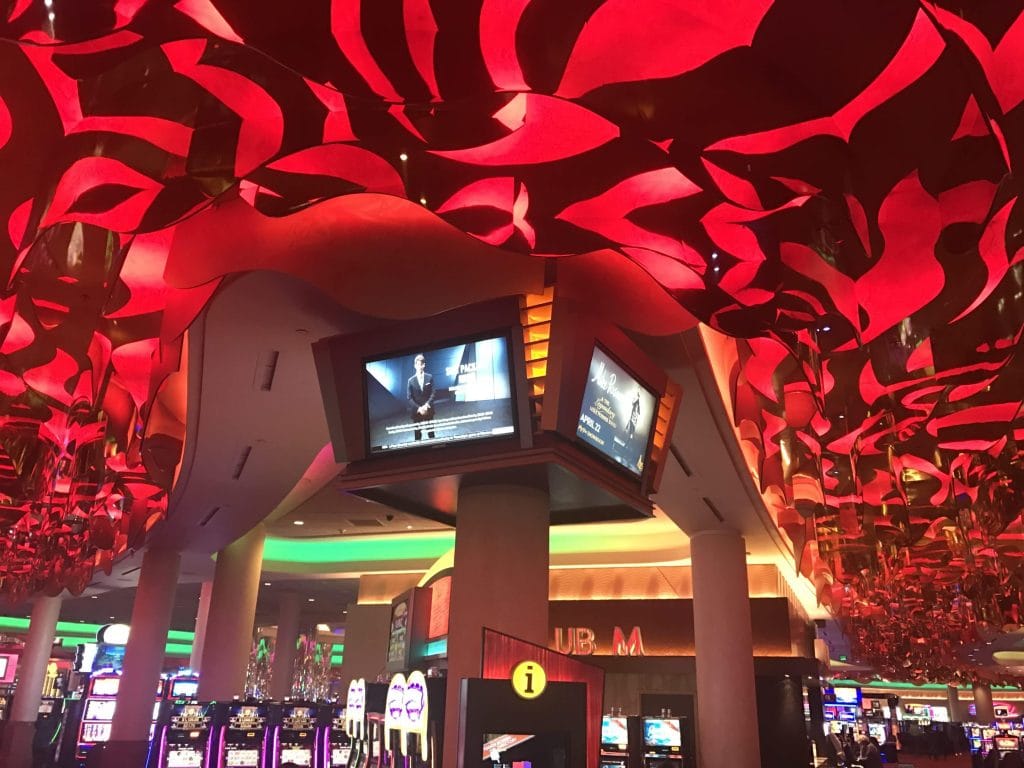
Mystic Lake Casino & Hotel IPTV and Digital Signage System
Digital Signage Questions to Ask Yourself
A big part of wireless digital signage is developing in a way that it provides value. You should only be installing a digital signage system that provides substantially more value than the cost of the system itself. This means you’ll want to focus on details during the planning stage. Who will be looking at these screens, and where is the best position to place them so the correct people can see them? How big should each screen be in each location, and how should they be mounted? Are any locations far from the reach of your network? Will you need to connect across the public internet for any reason? How do you intend to distribute content? How often? What kind of content is it, and who’s creating it and consuming it? Do the screens need to be interactive?
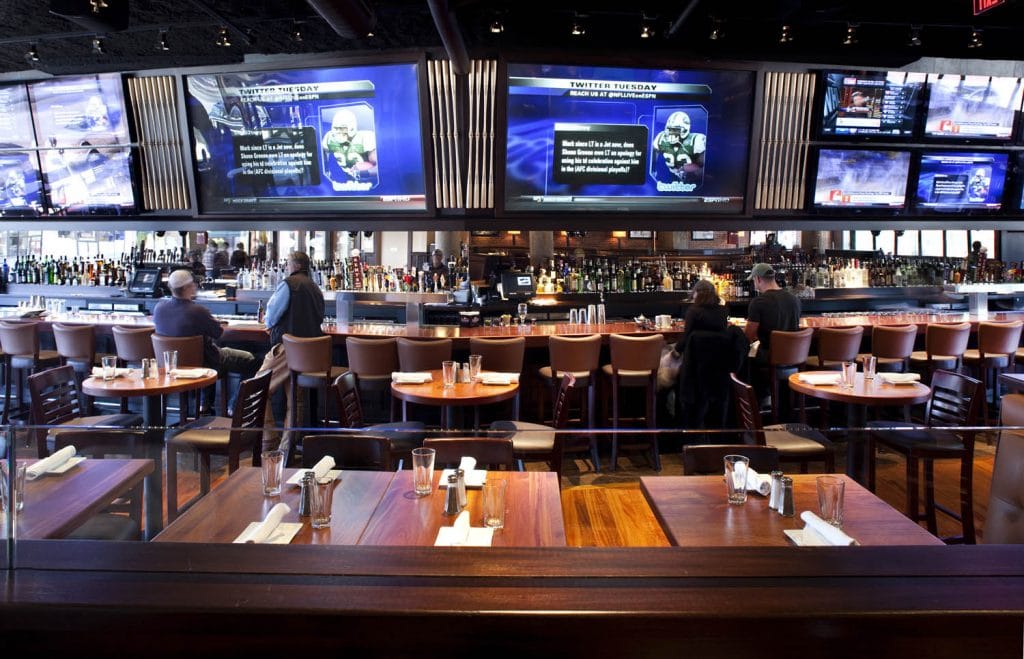
IPTV Headend Hospitality, Hotels & Casinos
Overview
The Scheduling and Management Tools provide a means of using all the features of VidOSign, with special consideration to ease of use and flexibility. Several tools are available based on operation and environment. VidOSign can work in the following environments.
Stand-Alone: In this mode, the VidOSign is a stand-alone system, but can be connected to a network as required for management and scheduling purposes. In this case user may log on remotely to VidOSign or use the local tools. Additionally, tools may use network resource through network programming. Group of networked VidOSign’s managed by Server: This is the most sophisticated mode
where a group of VidOSign’s can be deployed in a network and a back-end Server is used to manage them. Most of the advanced features are only found in this mode.

Mystic Lake Casino and Hotel – VidOvation IPTV Customer
In-room Television (IPTV) and Agilysys Property Management Integration
Using IPTV to Ensure a Better Experience at Your Hotel
Cloud Property Management Systems for Hotels & Resorts – Fully Integrated with VidOvation IPTV – Agilysys
Cutting-edge Cloud-native Solutions for the Hospitality Industry. Agilysys provides the most comprehensive and functionally rich hospitality software suite, delivering an exceptional guest experience from start to finish.
Cutting-edge Cloud-native Solutions for the Hospitality Industry.
Agilysys provides the most comprehensive and functionally rich hospitality software suite, delivering an exceptional guest experience from start to finish.
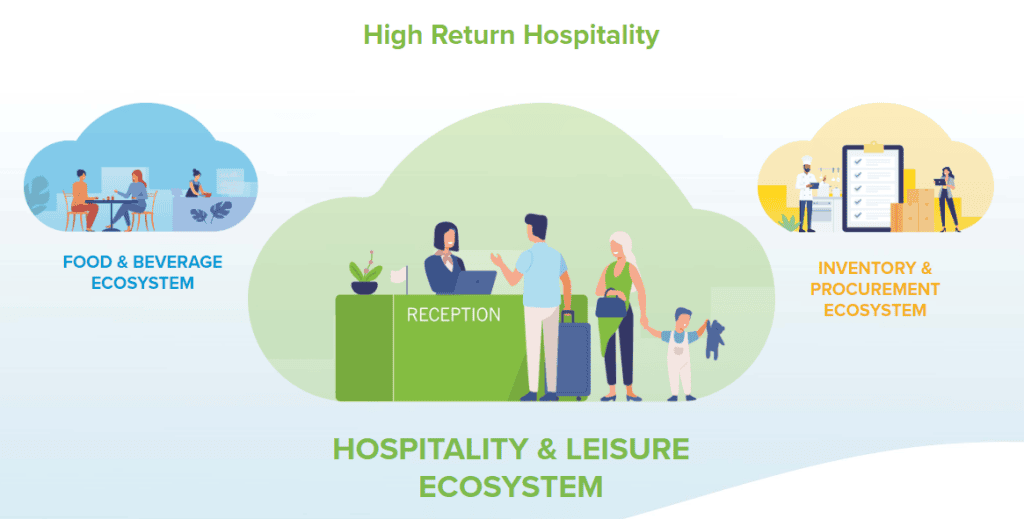
The Leader in Hospitality Software
“Today’s guests expect a contactless and convenient hotel experience. Agilysys offers the most comprehensive hospitality software portfolio with the most advanced features available in the market. We help deliver an exceptional experience throughout the guest journey, leading to increased revenue, customer loyalty, and improved operational efficiency.”
We Serve Hospitality Everywhere
Our guest-centric technology solutions have been purpose-built to serve the unique needs of these hospitality sectors:
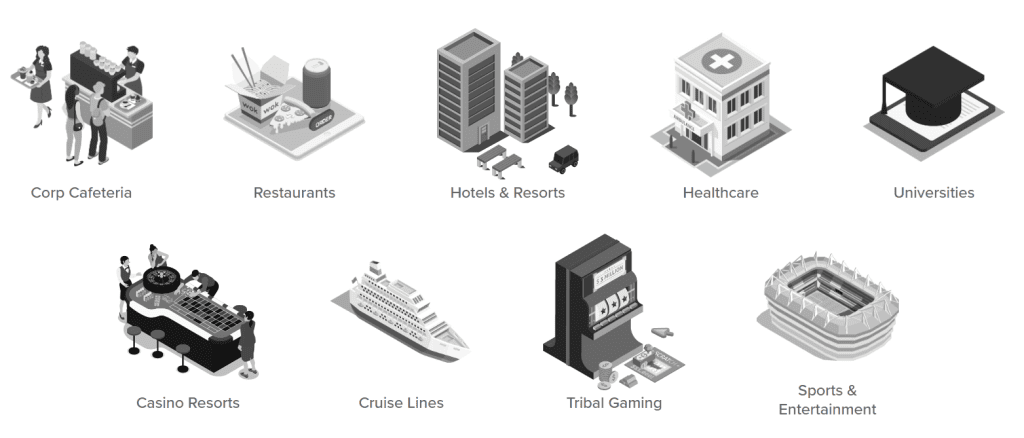
Contact VidOvation today to learn more about Agilysys Property Management Systems and the integration with VidOvation IPTV Systems for hotels, resorts, casinos, and hospitality. Call or schedule a meeting today. [Click]

Hospitality In-room IP Television and Property Management Systems
Using IPTV to Ensure a Better Experience at Your Hotel
Delivering a personalized, attentive experience to each guest and keeping your hotel cost-effective can seem like competing goals. It’s the challenge of every hotelier to meet or exceed stay experience expectations and operate their hotel on comfortable margins. IPTV can help you achieve that better experience without making too large of a dent in your operating costs. You might be surprised about the applications that IPTV can assist you with, from better housekeeping to easier check-in and check-out. Your IPTV system integrates with your PMS in order to offer more.
Here is how you can use IPTV to ensure your guests have a better experience at your hotel.
Promote Your Best Services or Amenities
When your guests arrive at your hotel, they may not have a clear understanding of the services and amenities that you offer. Using your IPTV program, you can showcase the services or amenities that your guest might most want to use. When you integrate your IPTV program with your PMS, you also have a better idea of which amenities any specific segment of guests might be most interested in. This targeted advertising can help you appeal to each guest’s own personal wants and enhance their experience.
Replace Brochures and Other Paper
Having important information on hand for your guests is important to help them enjoy their experience while in town. However, not many guests are willing to read brochures or other pamphlets these days. Using your IPTV system, you can broadcast all of the information to your guests, including nearby transport options, the best attractions and more. Unlike paper, IPTV broadcasts are simple to update when things change.

Integration with Your PMS
Your hotel’s property management system is the digital backbone of the building. VidOvation’s IPTV system can integrate with yours. Systems we work with include:
- Agilysys LMS
- Anand
- AutoClerk
- Comtrol
- Disney LILO
- Infor HMS
- Jonas Club
- Maestro
- Marriott
- Oracle/Micros/Opera
- QV-PMS
- RDP
- Softbrands / Epitome
- Springer-Miller
- TimeShareWare
Leverage Guest Data
When you collect guest information, you need to keep it secure. But your PMS system can also help you leverage that information to provide a better experience. That includes offering different packages or promoting different amenities depending on the segment of guests you have staying with you that day. There are many ways to use guest data to improve what you offer over your IPTV system.
Boost Sales, Improve Reviews
Delivering movies and television shows on demand is important for your guest’s experience and can help close sales and beat your competition. You may also improve your reviews and get a stronger retention rate on serial guests.
Get VidOvation’s IPTV at Your Hotel
Our team of experts is standing by to help you get the IPTV system you need to offer a more personalized experience to every guest—without adding too much to your operating costs.
Contact our team to ask questions about integration with your PMS or to get started.
About Indian Gaming Association
The Indian Gaming Association is a non-profit organization of sovereign tribal nations with other non-voting associate members representing organizations, tribes, and businesses in tribal gaming enterprises around the country. As the go-to resource for the community on education, legislation, and public policy issues, the Indian Gaming Association works to advance the social, economic, and political success of its members and the Indian community at large.
For more information, visit www.indiangaming.org
Learn how Paramount / ViacomCBS Reduces Costs by Keeping an Eye on the Production Floor With IPTV from VidOvation
By using VidOvation IPTV to deliver live internal studio feeds, DirecTV, and playout of its own content, Paramount / ViacomCBS can monitor quality control during production and distribution.
In this training session, attendees will learn how to design a successful, impressive, cost-effective IPTV and digital signage system that suits your unique requirements and budget, including:
- How to stream live video off-site to remote customers and employees working at home
- What’s needed to successfully implement and support live TV distribution to every device – Smart TVs, set-top boxes, smartphones, tablets, computer desktops, and more
- Learn how to distribute live television from DirecTV, Dish Network, cable, Over-The-Air TV, internal live feeds, studio feeds, and more
- Connect your Master Control Routing Switch outputs to the IPTV system for distribution across the enterprise.
- How to integrate a video-on-demand capability and full, multiplatform content library
- How to identify red flags and avoid the top costly project mistakes
- Digital Rights Management (DRM) related legal issues at stake
- Fully integrated Digital Signage with the VidOvation IPTV system or the integration of virtually any third-party digital signage or media player.
-


VEN-2200, VidOvation, MPEG-4 AVC Encoder, Dual-Channel, ASi Output, Stand Alone
-
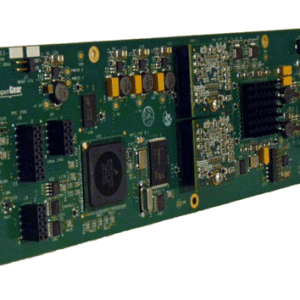

VEN-5200 MPEG-4 AVC Dual Channel Encoder Card with ASI Output
-
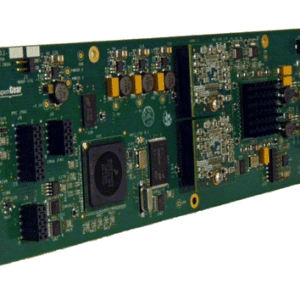
VGW-5100 openGear ASI to IP Encapsulation & De-encapsulation Media Gateway
-

Enterprise IPTV Live TV Networking System
-

VRD-2100 MPEG-2/4AVC SD/HD DVB IP Integrated Receiver Decoder IRD Stand Alone
-
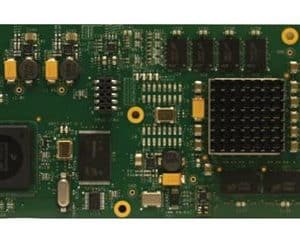

VDE-5100 IP De-encapsulator with 6 ASI Outputs openGear Card
-

Government Military IPTV Television System with Synchronized Simultaneous Playback by VidOvation
-

Education School University IPTV Television System by VidOvation
-

Stagebox Camera-Back IP SDI Transceiver
-


VNP-100 Encoder Transcoder & Decoder with Enhanced FEC Standalone Chassis MPEG-2 H.264 AVC-I 50-100 & Uncompressed, ASI Output
-

Stagebox Switch
-

VMT-2000 Multistandard Broadcast Transcoder

Fortifying Your Media Network With Analysis, IP Telemetry, and Cybersecurity [Workshop Recording]

Workshop Recording
Workshop Preview Video

Introduction:
Workshop Overview:
Tools of the Trade:
Key Benefits:
- Enhanced Visibility: Gain unprecedented insight into your network’s security, PTP, and connectivity status, empowering you to avert errors and disruptions proactively.
- Streamlined Analysis: Simplify the intricate process of packet and timing analysis through intuitive user-selectable applications, boosting efficiency and reducing errors.
- Improved Performance: Identify and troubleshoot network issues such as bandwidth shortages, data errors, and IP conflicts, ensuring optimal performance at all times.
- Increased Efficiency: Automate tasks ranging from asset management to alarm monitoring, freeing up valuable time and resources for other critical endeavors.
- Quality Assurance: Audit network performance to confirm adherence to desired standards and timing, ensuring flawless live production environments.
- Enhanced Security: Utilize detailed device profiling and risk assessment to identify and rectify security gaps, bolstering network resilience against potential threats.
Eliminating the Blame Game:
Conclusion:


Transcript Summary:
Jim Jachetta, CTO and co-founder of VidOvation introduces Providius, a company focused on fortifying media networks with analysis, IP telemetry, and cybersecurity. Roderick Smith, VP of sales, provides an overview of Providius, emphasizing their focus on network performance monitoring for media networks and IP traffic flow analysis. Providius collaborates with major network switch manufacturers to extract real-time telemetry and develop dashboards specific to media networks, addressing common issues and eliminating blind spots. They have an impressive client base across sports production, news media, stadiums, enterprises, and government entities. Beck TV and Game Creek are highlighted as key partners utilizing Providius software for network visibility and signal flow analysis. Technical partnerships with Arista, Cisco, Extreme, Netgear, and Juniper ensure effective collaboration in extracting telemetry data. Jamie Horner, VP of product development and marketing, discusses Providius’ major platforms: MVRT for network visualization and real-time telemetry and BMG for media analysis. These platforms aim to ensure network uptime, stability, and reliability, which is crucial for avoiding critical failures in media transmission.
The partnership between NVRT and BMG offers comprehensive network and media analysis solutions. MDRT focuses on network performance monitoring, ensuring network resiliency by identifying critical elements and potential failures in real-time. It provides continuous surveillance and detailed insights into network characteristics, including bandwidth, packet loss, and timing. Meanwhile, BMG specializes in media analysis, monitoring hundreds of media services simultaneously to detect faults and analyze various properties such as timing, package structure, and transport stream health. BMG’s flexibility allows it to handle different service types and be deployed on various hardware platforms or in the cloud. Dashboards provide real-time monitoring and deep dive analysis of media services, enabling quick identification of faults and detailed examination of performance metrics.
The discussion continues by exploring BMG’s capabilities, including its ability to measure audio loudness, analyze data services, and ensure compliance with captioning requirements. BMG offers versatility in monitoring and studying various media properties and provides notifications, fault detection, and triaging functionalities. A new version, BMG Lite, has been introduced for smaller media networks, offering a more compact and economical solution. The conversation shifts to troubleshooting network issues. NVRT’s real-time telemetry and network analysis capabilities prove valuable in diagnosing and resolving multicast-related problems, providing insights into network routing, bandwidth utilization, interface errors, and historical performance data. The conversation emphasizes the difference between traditional IT tools and specialized media-centric solutions like MDRT and BMG, which focus on the unique requirements of media networks, including synchronization protocols like PTP.
The conversation delves into the challenges and benefits of multicast in IT environments, emphasizing the need for education on its advantages and the intricacies of troubleshooting multicast-related issues. It transitions to an overview of BMG’s capabilities, highlighting its web-based interface, real-time monitoring, fault detection, and analytics functionalities for various media services. The discussion also covers the compatibility of BMG with encrypted transport streams and its deployment options, including permanent installation for ongoing network monitoring. Additionally, the conversation touches upon the security considerations and authentication methods, such as SAML 2 support, to ensure secure access to network monitoring tools like BMG.
The transcript concludes with discussions on authentication methods like CML2, LDAP, and Active Directory for network monitoring tools, emphasizing the transparency and security of session transfers without storing passwords. Both parties express the importance of shedding light on network issues and avoiding finger-pointing, promoting collaboration and proactive problem-solving. They highlight the benefits of network monitoring tools like MVRT and BMG in expediting project delivery, ensuring smooth network operation, and detecting changes that may impact media services. The conversation ends with invitations to visit Providius and Vitovation booths at NAB, emphasizing the availability of recorded webinars for further learning and collaboration opportunities at the event.
Full Transcript:
- Good morning, everyone. I’m Jim Jaketta, CTO and Co. Founder of innovation. I have 2 very special guests today of on our webinar from Providius. Isn’t that an amazing name? I love that name. It sounds so powerful Greek god or a Roman god. Right? We were talking about that. We’re gonna talk about how to fortify your media networks with analysis. IP telemetry and cyber security.
- I’m sure we’ve all been in those places where the broadcast engineering team is pointing at it is pointing at the broadcast engineering guys, the the network. And and it guys say, the network work is fine. The broadcast guys say, the signals not getting through. And what do we do from there? Right? So you guys help solve that problem.
- I have. Roger Smith, Vp. Of sales and Jamie Horner, Vp. Of product development and marketing. So welcome, guys I can’t wait to learn more about Providius.
Rodrick Smith
00:07:11
Thank you, Jeff. Thanks, Jen, to be here.
Jim Jachetta – VidOvation
00:07:15
Take it away all right.
Jamie Horner
00:07:18
Yeah. So let’s just jump in. We provided we we’ve produced some slides just to walk us through to make sure we cover all the material. So we’re gonna we’re gonna do that. And we’re also gonna take a look at it.
- Look at the products live. So we’ve we’ve got them connected up to a a live network so that we can take a look at some of the dashboards just to give some context. But
- please throw your questions into the chat, I think, Jim and foul are gonna help us triage some of the inbound questions. If there are any. Yeah. And the further ado, we’ll get started. I’m gonna
- punch up our Powerpoint.
- here we go.
- So I’m gonna let Roger get started on the intro and then I’ll do some of the more product specific details as we get get deeper into the slide deck.
Rodrick Smith
00:08:11
Alright. So Hello, everyone. So just a little bit of bit about the company itself, just to get started. So previous is a Canadian company. We’re actually based just outside of Toronto, about 25 of Us. Majority in R&D and engineering heavily focused on both network engineering and traditional broadcast engineering, which will become apparent as we we get into the products themselves. You know, privately held privately financed and profitable for something next slide, Jamie.
- So we are focused primarily on network performance monitoring for media networks an IP traffic flow analysis. Right? So we have 2 primary platforms that essentially analyze. And, let’s say, discover the network in real time using open protocols that the network, the network switch manufacturers use themselves.
- So it’s not to impair the proper functioning of the network. And this was done in partnership with the the major network switch manufacturers themselves. And we extract real time telemetry from those switches and also analyze the media and apply let’s say, a separate risk analysis, the actual network itself. This is, somewhat unique to the industry. I think there’s there’s many different tool sets that you can find either in traditional broadcast or in say, foundational network it engineering that are kind of specific to their their relevant domains.
- but nothing really that that combines the 2 in a way that is specific to media networks themselves. And and that’s where we come in. So we analyze the network. But we do so in a way that’s specific to the commonalities of media networks. So let’s say, you know, time sensitive multi cast networks, synchronous Ptp networks, etc. We have a number of different dashboards that that get directly to the root of these types
- of specific characteristics that essentially enable us to rapidly detect and isolate faults on media networks right? And we do this to eliminate the blind spots that Jim mentioned earlier. It. It’s quite common when you have. Let’s say, a mix of disciplines and technologies deploy for media networks such as you know, cots network it switches used with broadcast media that you’ll have kind of disparate, let’s say, disciplines, domains of expertise that have
- to come together to manage these networks. But up until now there was really, a common tool that was missing in the industry, and that actually kind of was the genesis of our partnership with with the likes of so say Cisco and Arista, for example, that we’ll talk about later was that they they essentially in in close collaboration with them. They came to us and said, Look.
- we have our tools, but they’re really generic it tools. We don’t have anything that’s really specific to the common issues that are are found in media networks. And that was kind of foundational in the way, not only that we get the telemetry data from the switches, but also the type of dashboards that you find in our products that are really specific to media networks that allow you get to the root of the problem very quickly, right? And this essentially eliminates the finger pointing between the different divisions, because the software is the designed to be shared
- among operations broadcast media engineering. And it engineering it is read only so there’s no danger with respect to who has access to the system. You know all of the powerful capabilities that you would find in a network. It manufactures tool set, typically Co, closely guarded by those who are trained to use it for for good reason. This allows even operators to have visibility into the network to know what’s happening in real time and to quickly identify identify problems. So
- when something does occur, they know almost immediately, if it’s just a a broadcast related issue, maybe a vendor compatibility issue or improper configuration, or something specific to the network itself. But when they call for help they know exactly who to call and what the issue is. So it it it gets right to the root of the problem.
- And then we also provide an enhanced level of security analysis and and and risk evaluation for the networks themselves. And we do this in a way that is, let’s say, sensitive to media networks themselves. So typically cyber security software that you find in the industry either requires an agent to be installed. The devices which is not practical or many times possible in in media devices
- or when they do a a port enumeration scan, it’s done in a way, that is, let’s say, too aggressive and can provoke problems. Or you know, that causes the devices to crash. So we do this in a way that is sensitive to those devices that allows us to create a score card that allows everybody involved to know how the devices are configured, what ports are open. Commonly associated risks and rep recommendations so that you can arrive at a target involvement.
- communication guide, and every device that’s installed in the network has a known configuration that has been approved and meets your cyber hygiene or cyber security risk needs. So next slide, Jenny?
- So who do we work with? You know, over the the past 10 years of our existence we’ve amassed a pretty considerable and impressive install base, and we work with some of the biggest names
- in the industry I won’t name drop, but certainly feel free to reach out to Jim or myself, and we can certainly, you know, offline, tell you about all the wonderful customers we work with, but that just to kind of put some domain space on them, we work with some of the largest sports production and some very innovative customers doing some very innovative work. Around sports production and how media is consumed.
- Certainly, you know, live production predominantly. 2110 media networks. Iptv. We have some very large news production customers.
- We’ve worked with a number of stadium and venue customers, both in the United States as well as overseas large enterprise customers and enterprise networks, you know. We get into large, you know, government entities. Corporate financials.
- One of our biggest customers is actually streaming media division of a very large, well known company. That has essentially has thousands of flows under analysis under our IP flow traffic flow. Monitoring solution. The trucks and Obans, we’ve have a wide deployment on live production obans globally. I mentioned Game Creek because we have a public
- press release with them that we also touch in a little later in the presentation they have 9 IP Obans deployed with our our software and use for some of the world’s you know, biggest and most kind of, let’s say, mission critical and demanding life, supporting events 2 of their Obans with our software deployed for the Super Bowl most recently. We also have a software deployed for mission critical contribution networks for 2 large customers, let’s say one in Brazil and one in Germany without naming them specifically. Live events and and government, as I mentioned as well.
- Next slide, please. So getting specific to some of our partners. Becktv, a very well known integrator in the Us. That does a lot of very important and large projects. Both for some broadcast networks and news production customers as well as quite prominently in the stadiums and venue space.
- They use our software not only as an advantage to the customer. So that day 2. The customer who maybe, you know, having their first experience with cots, network infrastructure for 2110 and live production in their mission critical environment. But they use it themselves as a deployment tool.
- So that TV actually uses our software to go in and help make them quicker in terms of getting the network configured correctly, doing a proper inventory, making sure that everything is essentially as it should be, and then they use this as a let’s say, a knowledge transfer tool to help educate the customer and then leave it in their hands so that they, too.
- the customer has a tool that they can use that gives them visibility into the network, whereas many times certainly staffing in the statement venues is a challenge with respect to having that that mix of like a senior broadcast engineer plus, you know it. Network engineering. So this is something that essentially beck uses to ensure that they themselves are successful in terms of the deployment of their projects, and then mix a happy customer day, too, so that they have all the the the adequate tools that they need to to manage this new system that they’ve been. They’ve been given
- next slide, please. Game Creek, as I mentioned as well. So Game Creek. You know.
- synonymous with the world’s most important sporting events. Very innovative in terms of their use of, let’s say, IP, video over IP 2110 they have a like. I said, 9 trucks with our software deployed some of the biggest. Let’s say, tier one production trucks used most recently at the Super Bowl. So they use our software, both for the network visibility but also for the let’s say, the signal flow analysis and Ptp related issues.
- We speak with them often and and quite complimentary, and saying, Move, the software is something they call a daily driver something that they constantly use, that they’re always using PGA masters tournament. Last year they used it in their first production. 4 k, so you know, a key customer to ours that that really depends on our software to help them, you know, drive innovation forward and manage this complex infrastructure that they have
- next slide
- some of our technical partners. So, as I mentioned previously, Arista Cisco really foundational in developing the dashboards and the methods which which we extract the real time telemetry from the switches. They’ve been great partners to us over the years, you know the quite prominent, and in the tier one 2110 space.
- and really help collaborate with respect to roadmap and and things that we can do to add value to our customers that are, let’s say, gaps in what they offer with respect to kind of traditional network, it tools
- and over the years, of course, we’ve also developed some additional partnerships so extreme and net gear quite common in the corporate AV over IP space, you know, large corporate financials and corporate enterprise, etc. With neck gear, also making a move into 2110 cost infrastructure as well, and juniper both. You know, commonly known as the same network backbone for land networks, but also with the media fabric for 2110 as well. So you know, great collaborations and partnerships.
- and the way that we extract the telemetry essentially, by open standards and each manufacturer would say, has their flavor, but we work closely with them to make sure it’s done correctly. We’re not doing this from the outside, looking in. We’re not trying to, you know.
- Crack the box and see how we can get it. We work hand in hand with the manufacturers to do it in the way that they do it themselves next slide.
- And so now to get into some more product, specific information, I’ll turn it over to Jane.
Jamie Horner
00:18:23
Perfect thanks, Roger.
- As Roger’s pointed out, we have 2 major platforms at Providius. The first mentioned here is our Mvrt software. This is the network visualization and real time telemetry product
- categorically, this would fit into the network performance. Monitoring category of of solutions for for the monitoring of of networks. Obviously, providers. Secret sauce is a blend of
- both the network performance metrics as well as collecting
- data from the different broadcast elements or media elements to blend those 2 together to create a cross section of the network where we look at
- some of the up principle, it fundamental information. We look at some of the media information. It’s all presented in a single dashboard. So it does really hyper focus in on networking and the transportation of media and timing on those networks.
- I think the the common question we would normally hear from from sort of the It side is, is, why do we need a unique set of tools, and I think projects touched on this a little bit already. You know, it has been built sort of on a principle of about a 95% rule sort of if everything’s working at 95, if you have about 5% sort of loss of packets throughout the network due to latency and bandwidth, etc.
- That’s good enough, you know. Retransmission will take care of the rest. Unfortunately, when it comes to media that 5 is, in fact,
- pretty critical and actually becomes fatal. When it comes to audio and video and timing on a network. So that’s really where Bravidis focuses in on is to ensure the uptime the stability and reliability of the network looking for those critical failures before they spiral into off air or out, you know, incidents or outages, incidents that that could have been avoided. Should you have had some greater insight into the performance of the network ahead of time.
- So we’re gonna talk about Mvrt, in a couple of slides. We also have the broadcast media guard or Bmg, this is our media analysis platform. And
- we’re we’re gonna go into some more detail on this product as well. The partnership between the 2, although they are 2, stand alone platforms. They absolutely can be deployed unique separately for different, for different projects. We a lot of times do jointly deploy both products because they complement them complement each other so well. And they do create a full 360 degree view of the environment where Nvrt is focused on the network and network performance.
- Pmg is focused on the media and looking at the the media specific details, looking for false trying to find any kind of impairments that may. That may be affecting quality of service of a particular media
- component video audio or data within within a met a media environment. So the 2 platforms, like, I said, can absolutely stand alone, or they can be deployed in a partnership where the information really becomes even richer. You get a much better total view of your of your environment.
- So starting with Mvrt just to discuss it, just to kind of quickly overview, it’s it’s functionality. And it’s it’s sort of role. So in many environments, we’re under uninterrupted delivery is paramount and Vrt plays a crucial role in ensuring network resiliency by identifying prioritizing critical network elements. And Drt fortifies the network against potential failures and disruptions.
- So it’s key features of real time issue detection. As I just mentioned. So it’s using information or telemetry data from the network switches. So each network switch within a media environment, the Mbrt is communicing and communications with. And it’s collecting the metrics data from those switches to develop insight into not only the physical properties of the network.
- but also the the functional or performance details of the network, like the bandwidth on each of the interfaces. Any kind of packet loss present presentation of Ptp, the timing of Ptp, as well as any kind of disconnects in the network, from from the standpoint of of devices or software that are joining or leaving the network at any point
- it develops insight into the physical layer. We’re gonna look at this, a little more detail. So it builds up network maps. It creates
- a comprehensive table of all the media services. So it’s able to acquire the different route tables from each of the switches. And it builds a a sort of global view of all of those media resources. So that you understand the where these media where the media is originating from who the consumers are. How many hops and sticking across the network which interfaces is that media touching so that you can, you know.
- map and trace those those media services in real time.
- Can be run in a headless mode where it’s evaluating these details. It can generate notifications and alerts that you can customize. So you can create a a sequence and series of of what you want to be notified about and how critical it is to the operation, so you can run in that mode. And then there are the dashboards that you can then log into the product, using a web browser, and you can then do a deeper dive. So
- we really look at Mbrt sort of having 2 roles. It helps out in operations where it sort of provides that continuous surveillance of the network and feedback to to identify faults or problems. So this kind of brings awareness. And and it kind of brings attention to potential issues that might be going on within the network that could could result eventually in some type of incident with with, you know, with some media on the network.
- and then the the tools can be used by engineering for them to step in, to then go in and do a deeper dive and a deeper investigation into what exactly is going on. As as the Mbrt. Is logging a lot of information, it’s retaining that information for up to 30 days.
- so that you can go in and do some triaging look at some specific details, look at some timing characteristics to see when these events occur. So it is quite a powerful platform that can be used by the by different organizations within, within a within a broadcast or media environment
- so just quickly highlighting some some application notes here.
- Is actually quite widely deployed. A lot of a lot of projects that we are involved in our 2110 projects, 2110 being, I guess, the the sort of the the latest generation of of sort of large buying, compressed media routing. We also work in 2022 dash
- and a lot of the 2110 environments are dash 7, or the 2022 dash, 6 is are also dash. 7. So the red and blue style networks where Mvrt is is really powerful, in that it provides clear insight into the the construct, the construct of the red and blue network. Especially we spawn understanding of the connectivity and relationship and then being able to obtain all of the routes in the media that that is on the network.
- We’re also able to correlate that media, those multicast services with the broadcast control system as well as with nmos registration and with the orchestration layer. So it’s it’s able to collect and bring forward a lot of insight regarding not only the networks performance, but also how that interacts or intersects with the control system and the orchestration layer. So things like setting up Stp files
- checking to see do bandwidths. You know, match what’s expected based on, but based on the characteristics or registration. And so those are a lot of really intimate details that Nbrt gets into to help spot problems that that may cause congestion or over subscriptions in the network.
- So it could be really, really powerful in these types of environments. In addition to tracking the presence of Ptp and the boundary clock in the clock chain as well. So understanding and developing what the boundary clocks
- who the boundary clocks are, and if they’re locked or unlocked to the Grand master. So there’s a lot of
- There’s a lot of very specific features and functionality built into Mvrt that really really complements a 2110 environment. So there’s quite a bit of capabilities there in the platform.
- So just some dashboards that we have in the slides just to highlight some of the functions that that it provides. So like I mentioned, it is able to determine in real time the physical properties and layout of the network. So it constructs a real map of, or a topology of, the network.
- And it is real time. So as things connect and disconnect from the network, the end of your T will automatically add or remove those devices from the network topology and then create an in a a notification as well that those things have occurred so that you can track those types of physical changes.
- It’s able to acquire route tables from the switches so it can build up a comprehensive view of all of the multicast services. And it can also provide an overview, showing the exact path that a specific multi cast is taking on a network so it can track
- from the originating point from the transmit point all the way through to the receivers. And you can see and confirm how many receivers are on the network are consuming a particular multicast
- that also helps you correlate that back to the broadcast control system, where you can check to see if this, if if these 2 things are synchronous or not
- rent as as Roger mentioned in the opening. We’ve started to build in some functionality into the platform that starts to touch on some of the cyber concerns. So as we are transitioning to IP, we’re utilizing network infrastructure within a media environment that does increase the potential for cyber risk
- the potential that now that everything is on on the network, including the media itself. That there is potential for for tampering, for, you know, for for disruption from a cyber security point of view. So that we’ve started bringing this functionality into the product. One of the features that we’ve developed is the ability to evaluate the risk of a particular device from a network characteristics point of view. So we’re looking at how many open ports
- each one of the elements on the network is using for communication. So that’s helping us characterize. Whether this device has a low risk, profile or a high risk profile, and whether or not the devices using
- network ports that would be considered higher vulnerability. So things that perhaps aren’t encrypted that are in the clear that don’t use passwords, things that would allow someone to easily tamper with the device. The Mvrt is able to help us check for that and spot those types of risk vulnerabilities, and then presents that up in a nice, clear, and concise way, so that we’re, you know, made aware of what’s going on, and
- part of part of a cyber security deployment or program is really about visibility. It’s just about creating insight and awareness. And that’s really a pretty fundamental piece to to helping solve some of the cyber challenges. So that’s a part of one of the features that Mdrt. Offers that does help it play that role from a security point of view.
- And I mentioned tracking. Ptp, so we have some dedicated dashboards that allow Mvrt to continuously track not only that the switches are locked to Ptp. But also defined. If it’s on the primary Grand master or the backup as well as tracking the timing in the in the meantime delay, so making sure that the boundary clocks are still remaining accurate. And they’re not drifting in time, which could cause some alignment issues or phasing issues.
- For any of the devices, using ptp as a reference point
- and then, like bench like mentioned before Mvrt is used in a lot of different networks. Not just 2110. We, you know, it’s deployed wherever really media is present, so that could be anywhere from large distribution networks to streaming networks to iptv digital signage the list goes on. So there’s a lot of variety of of networks where the Mvrt’s been deployed, and it provides a lot of
- very useful insight of in performance metrics. But this is also where we start factoring in the Bmg.
- so the Bmg’s role is to analyze the media services on the on these networks. So in addition to insight into the performance of the network, we’re also able to look at the media itself.
- and in some in some regards, bmg, may come first in terms of the whole chicken and egg conversation. So perhaps you wanted to use Bmg, to analyze the media services so its role would be to acquire. however, many media services you have on a network and continuously analyze those services, looking for faults, and it looks at a lot of different properties. It looks at timing, it looks at package structure, looks at training.
- transport stream health. It looks for synchronization. It looks at the essence, it decodes the video, the audio, the ancillary data services. It looks at compliance, the information. So it does a lot of inspection, a lot of studying of the different media services that it’s acquired, and from there it would develop whether or not there’s a fault.
- and perhaps at that point, if we detect faults in our media service that we would turn to Mbrt. To determine. Is this a network related issue? Or is this some coming from somewhere else? And so, like, I mentioned the 2 products definitely, very complementary.
- So the features of the of the Bmg, the media analyzer is its ability to monitor hundreds of services through a single instance. So one Bmg installed on, say, one cots server, hardware device can
- subscribe and retrieve hundreds of services at the same time, and analyze those services concurrently, and it could be a mixture of service types. It could be compressed domain. It could be uncompressed. You know, we we deal with Mpeg, 2 ts, we deal with. Ndi, we can deal with Ipmx. We can deal with obviously 2110 as we talked about
- Hls streaming services as well. Hgvc, Jpeg, 2,000 Jpeg access. So really, the list goes on, it’s it’s obviously a very flexible platform. And the really nice feature of the product is it’s capability to look at those different services simultaneously. So
- a single Pmg. Could be requiring some uncompressed content, at the same time acquiring some compressed content, and doing an evaluation on them at the same time. So which makes it quite flexible. And it’s
- in its use cases.
- So just some quick application notes here on the Bmg, the the Bmg’s really, it is a software application, and it can be deployed on cots hardware. It can be deployed on vm, it can be deployed in the cloud as well. So we also have a cloud. Instance, that that can be utilized or deployed.
- in any of those 3 cases. It really is up to the hardware. It’s been deployed on for zoom, for instance, on a cost server hardware platform. You could have multiple network interface cards and the Bmg can utilize each one of those network interface cards to acquire media from different networks. So
- in this example, we’re looking at a single Bmg acquiring media from both the red side network, the blue side network, and as well as a purple network.
- And this might be the key Leo, the the example of some uncompressed content from the red and blue, and then some compressed content. Perhaps off the purple. One instance, one deployment of Vmg will be able to handle those 3 different networks at the same time.
- In terms of network interface we work with some off the shelf
- cots, network interface cards for uncompressed. And we can deploy those network interface cards with up to 100 gigabits per second per interface. So you can acquire quite a large bandwidth of of media per network interface. And the Bmg can analyze all those for us.
- So a couple of quick dashboards like I mentioned, we we can definitely jump over the to the live demo as well to see these with some moving elements, but just to highlight them here. So these are the 2 dashboards at the Bmg that common dashboards that you would normally find in the Bmg again. Like Mvrt. It’s running headlessly. It’s acquiring these services. It’s continuously analyzing them.
- It’s gonna generate notifications whether it’s email help it to slack syslog snmp, so it’ll it’ll send out notifications. If it does detect a problem, it can notify Mvrt, of course.
- And this is where, perhaps, then, an engineering team an engineering member might log in and they would use them these dashboards to take a closer look at what’s going on. The upper dashboard. This is an overview page. Every service that’s being monitored is pinned up on this page. So this is a quick heads up of all the media services.
- This will help us identify quickly if there’s any faults occurring in these services, as we’d see a flashing border a warning or a highlight there that that would tell us. Okay, we have a service that’s that’s got a fault with it
- the dashboard here at the bottom. This is where we’re taking a deep dive into one of the media services. So this is where we chose into open up that media service. And we’re now doing a deep dive. We’re looking at these these these widgets that each one of them is a dedicated measurement which is measuring the media service. And it’s actually recording at the result.
- And it’s storing those results up to 30 days. So we can go back up to 30 days and look for things like Rtp packet loss or epic to transport stream violations. And also obviously is analyzing the essence. So it’s looking for frozen black missing video. It’s looking at audio levels.
- You know, audio too high, too low. It’s also able to measure audio loudness so it can even do an Lkfs measurement as well. In addition to looking at the data services so it can be monitoring. Study triggers and logging those it can be looking at your captioning to make sure that’s present if you’re looking for
- compliance products to to confirm compliance, you know, making sure that you have those elements in place. So it does a lot of versatility. There are a lot of things. It’s it’s measuring and studying. So you have this
- notifications, capability. You have this false false notifications, and then you also have the ability to to triage. So it’s more than just alarming and and and errors. It’s also about diagnosing, triaging, and eventually figuring out the root cause of the issue. And that’s really where Bmg, is quite powerful.
- So a couple of more just application notes. This is just sort of Sh show showcasing the blend of different networks that it can operate on, and the different types of services it can operate on. Again, as I already mentioned, uncompressed, compressed, a variety of different services
- we just recently introduced. In fact, we introduced the bmg light at the beginning of the year. Bmg, lite is the more compact version of the Bmg. Pro. So we found that there are customers who don’t necessarily need 200 plus services of monitoring simultaneously don’t need all that horsepower. So we’ve come out with the Bmg light. The Bmg, light is meant to, you know, be used in smaller
- media networks where there’s fewer network services that need to be monitored, so that you know to something that more compact would would fit the bill. So this is a more compact, more economical version of our our VR bmg, pro.
- And we end up using the Bmg light targeted to things like smaller production setups like an Ndi or Ipmx style setup where fewer services, maybe compared to a bigger 2110 style network. We’re also seeing it used in Iptv digital signage networks where clients are looking to, just, you know, beyond just sort of presence of the Iptv elements. They really want to understand
- all the Channel bouquet. Are there any issues? Are there any faults in the system before those you know those services. Either there’s some quality of service impairment, that’s, you know, causing a visual or audible breakup in this signal.
- this would allow you to to catch and detect those issues far before someone to text them. Visually within, you know, within, within whatever project it is, whether it’s in a venue or within a corporate, you know, iptv, or within a say airport, etc. This just is a nice centralized way of of monitoring all these. You don’t need a full control room. You can do it all with
- with with a single, with a single box essentially using the B and G light.
- Okay, at this point I was going to just do a quick highlight of the products through a live demonstration. I’m just gonna open up some of the similar dashboards just to show them kind of moving, and just to show just to give an idea of what the product looks like. Live. But I thought I take a break just before I do that. If there
- questions in bound, I’m not really paying attention to the chat. So if there were questions thrown up there. Oh, yeah, the chat. No questions on the chat, but I got like a whole page full, so so similar to to Becktv.
- Yes, we do. We do a lot of Iptv solutions
Jim Jachetta – VidOvation
00:41:19
from a networking standpoint. Relatively simple. These are not simpty 2110 we were. Typically we have, like over the air TV tuners, a bringing in direct TV most of the traffic is if not all, the traffic is multicast udp.
- mpeg, 2 or h dot 2, 64, and
- I’ll give you some scenarios now I would I would never let one of my engineers touch a customer’s switch
- and most most customers would never let
- a vendor mess with their switch, either. If a customer wants you to play with their switch, I’d be very scared. So I mentioned you guys to some account, some deployments where we’ve had some mysterious networking issues.
- And it’s a little bit of a finger pointing. You know, the the customer is tired of innovation, and our team saying it’s the network and the customer and their network people, and you know
- neither side has definitive proof where the problem is.
- And so so it’s not fair to point fingers at people, unless you have all the all the the smoking gun so I’ll give you a couple of scenarios. So we we one brand of encoder. I won’t mention names.
- I gmp, it’s enabled it just won’t propagate it. It’ll it’ll reach
- the first hop. But then, if I’ll give you an example. So so it’s a, it’s a relatively flat network. Only 3 hops to it. To a TV. We plug Vlc, a. A. PC. With Vlc player or Ts reader Wireshark.
- we, we bring up the TV channel and Vlc player. It plays fine. When we put the set top box in, and it requests that particular encoder’s feed.
- We we can see in wireshark the Igmp request going. But we’re we’re not sure what’s happening. Why, it’s not working. Could you shed light into what’s what’s happening in that in that scenario? Why, that?
- Why, that set top box cannot join that particular encoder stream.
- Am I getting 2 into the weeds? But I mean, so so basically, we obviously, there’s some sort of an Igmp problem, you know. Maybe we’re all not on the, you know. You know, there’s version 1, 2, and 3. Maybe we’re not on the right version, or there’s some switch or some asset. I can’t double check the customer switch to make sure we’re all on on version 2. So, Ca, how would you help?
- Kind of troubleshoot? Maybe at a higher level, like a multi cast issue? Would you, would you lend visibility? You could see the stream where it’s stopping.
Jamie Horner
00:44:20
yeah, exactly. So you know what you what you can use Mbrt to do is to confirm what the network switches are
- routing or or switching right? Depending on on the all you in this case it sounds like routing. So if you don’t see in the Mdr. T’s dashboard the multicast, then you can conclude that the multicast was not carried out by the network switch.
- So you know, if you have a 3 layer switch or 3 switches. Sorry in a stack. So you have this, you know
- 3 hops you can. You can definitely check, in fact, why don’t we just take that?
- Take a look at that while we’re talking?
- So I’m just gonna open up the dashboard here. So we’re just jumping into Mvrt. Uses a topology dashboard. So this is like I mentioned, it’s studying the the network and determining exactly the the network layout and all the connectivity.
- if I was to go to one of my switches and look at its route table right? So again.
- You don’t need to be an expert in it. You don’t need to understand how to use Cli. You don’t need any training here. I’m just using Mbrt. It provides a a, a effectively, a a non, you know, non-vender P specific dashboard. So it doesn’t matter what manufacturer switch. You have. The presentation layer is always gonna look the same.
- This is showing me my multicast that are inbound into the switch. It’s giving me a label. So this could be a label that I’ve statically assigned, or I can Mbrt can actually source this label from a broadcast control system. It tells me which device is generating the multicast
- which interface on the switch it’s connected to, and then where that multicast is being routed or forwarded to. So this is a this is a view of in this case the specific switch we’re looking at. But if I was to go back to the table, and I knew exactly either the multicast group address
- or the static name. I can do a full path trace to see
- that multicast where the sender is. where it’s connected.
- How many switches it’s going through. And then who is subsequently is the recipient or receiver of that? So in Jim, in in your scenario, if, for instance, instead of replacing your Dlc session, but putting the set top box, perhaps on another port, both of them making the join request.
- What I would expect to see is the sender the multiple hops, and then I would expect to see both recipients showing the the the multi cash successfully delivered. If I’m only seeing one of those, but it does successfully make it all the way through the 3, you know. Switch hops. At least. I know that the multicast is being routed by the switch that then I’m I’m looking at. Okay, what’s going on? The set top box.
- Ver, you know, is there incompatibility? As you mentioned the switch? However, you know it’s telling me where this multicast is forwarded according to the Igmp join request. When that join request comes in. It looks at the multicast
- route table. It says, Okay, I have this. I’m going to forward that to this interface from the requester. So if you’re seeing, you may even see that it is sending it or forwarding it to the interface. It’s now just a matter of the setup box, not recovering it correctly, and that could be where the breakdown is, but this would absolutely allow you to do a full diagnostics on the network, looking at it from the media point of view.
- making sure and confirming that the network is carrying out the route requests as you as you suspect or expect that that it should. If you see that only the first switch joins the multicast, and that there’s no multicast. Forward it on from that point. Then, now you’re looking at switch configuration. So perhaps
- Pim isn’t enabled between the switches. You know, you’re getting into obviously into the weeds. Now, you’re getting into more specific hardware network side, which would then obviously call in your it department to to help with, or sometimes even the manufacturers themselves might not, or at least there’s a smoking gun where to look, you know.
Jim Jachetta – VidOvation
00:48:40
Ii don’t like playing the blame game, either. You know I’m always looking, you know. Let’s solve the problem. I don’t care which vendors fault it is, it may be, may be our fault, maybe the networks fault.
Jamie Horner
00:48:51
So in this case, and I’ll just finish this example. The Mbrt is building us the full. It’s tracing. The route is building us a topology of that route. It also is bringing up a heads up table to show us the interface information for each path, each port or interface that that multicast is crossing. This is also super beneficial, so I can check to see are we over subscribed on this interface?
- Perhaps the real reasons the multicast isn’t getting forward is that there’s no bandwidth left on that that interface forward to maybe
- unbeknownst to you. There’s a bunch of multicast already flooding your network. You can’t see that with the human eye, you can, you know. But with Mvt. You can inspect for that type of detail. You can see if there’s any errors also. So perhaps the the switch is dropping packets. Right? It’s just you’re losing like 50% of the packets like we talked about, 5% could be fatal.
- You you, you know, you might be seeing a disruption in the network itself that’s causing, you know, that multicast not to be joined successfully. If you’re using Sfs, you can check the Sfp values with Mvrt quickly to see on my end. Spec. That my out of spec. Perhaps there’s an issue there.
- If you really wanna go and look, you can even go back and and break, dig deep into the interface itself. Look at any of the other multicast that are actively on that interface. Check out the timeline. You can look up to 30 days to see what the performance has been with this
- particular interface. Perhaps you’re thinking yesterday, but today it’s not. Maybe that question comes up a lot like, why, why did this? Why do we? Why, why this anomaly creep up? Things were working just fine for years.
Jim Jachetta – VidOvation
00:50:35
When did you know, was it? You know I have no smoking done. What did somebody push a firmware update to all the switches and something? Something got changed.
- So at least, if we had a date a timestamp of when it at when it first started.
- That’s a smoking gun. So I mentioned you guys to some of these clients like, Hey, we need a tool like Providius.
- and they’re like, Well, we have solar winds, or we have other tools.
- Those are I. Those are good tools. They’re it tools, but they’re they’re not looking. They’re not media centric. Right? Can you make speak to that a little bit like the differences between what you guys do and and the the tools it departments may be using already.
Jamie Horner
00:51:19
Yeah. And and you know, some cases, it it also comes down to the the mechanisms for data collection. You know, we, we’re getting effectively real time telemetry from a lot of the network switches. So we’re getting extremely accurate information. That’s up up to date. We’re delving deep into the the route tables of the switches. We’re looking, you know, at those media services.
- Specifically, we’re correlating those with other systems like we’re bringing in the mnemonics for the, for the multi cast groups addresses so that you can relate to something. You know, human relatable. So yeah, there’s there’s the, you know, we’re we’re kind of marrying a bunch of different components and elements together,
- and and kind of very much concentrating on the media. Specifically, the media services themselves as as it’s presented to the network.
- Another another big element, too, is. It’s in synchronous networks, in in 2110 and 2022, and as 67 and Dante, you have the you have the presence of Ptp, and and it’s critical. It’s a fundamental element of that media network. And it’s it’s critical in success of that media network, that Ptp, be present, that it’d be coherent
- and that everyone has access to it, so that, you know the services can remain synchronous. So Mdrt again specifically looks at the performance and data from the switches in regards to Ptp. Ensuring that they’re locked.
- identifying which interfaces they’re leading on, checking to see what the delay in sync messages are and announcement messages that they’re generating, making sure that the timing is is accurate, that it’s not, you know, wildly changing. That, you know is gonna cause problems as well. So there’s there’s a lot of functionality. And brt, that really.
- at least, to my knowledge, you won’t find in traditional. It. Software is just because it’s elements and components that aren’t commonplace.
Jim Jachetta – VidOvation
00:53:27
Video was not a thing when a lot of these network protocols were were invented. Right?
Jamie Horner
00:53:37
Yeah. Not only is it not a thing a lot of it. Departments have policies against multicast. It’s rare. But yeah, or or at least at minimum. They’re afraid. And we we.
Jim Jachetta – VidOvation
00:53:48
you know, we have to educate them on on the benefits of multicast. It puts less load on your network, etc., etc. or or it’s like fear of the unknown. I’m not familiar with multicast. So I’m trained to just say, No.
Jamie Horner
00:54:02
exactly. Yeah, yeah, yeah. I mean. And and you know, one of one of one property of multi cast, that this could come up also in troubleshooting. One multicast element is the Ttl or the time to live values set.
- So you know you you, the the switches decrements, the Ttl value each time they forward the multicast on if your Ttl. Values are set to one. Then, you know, in the scenario with 3 switches. Then, yeah, well, that that’s the first thing me and all my guys that that’s our number. If the stream ain’t propagating, go back to the source.
Jim Jachetta – VidOvation
00:54:40
Some vendors, the the Ttl. By default, is set to one out of the encoder. I’m like, WW. What you know. Maybe it’s just a safety mechanism like, let’s set it to one. They’ll have to figure it out. Yeah.
Jamie Horner
00:54:54
yes, absolutely. Okay, so that’s the Mdrt, quick, quick, quick overview. I wanted to also touch on the Bmg, so just opening up another tab on my web browser should have said that from the beginning. So just using a standard web browser to access both
- Mvrt and Vmg, so which is really nice, it’s a a 0 footprint architecture, meaning there’s only the application. The Mvrt or Bmg, you don’t need any client side software. You just need a web browser. So it is, you know, effectively a modern environment in in that regard. You can bring up these dashboards on your laptop, on a desktop on a tablet
- so super flexible you can be viewing this, you know, on the go you can be viewing this through Wi-fi in the Bmg’s case, where we’ve logged in. We’re looking at the overview page. So
- I’ve set this up. We’re in our lab. We’ve just acquired some of the services. Some of them are uncompressed. 2110. Some of them are Mct. Transport stream. We’ve got some some 2110, 30 audio here, or sort of it. Ef 67 variation. Here. Again, it could be a variety of media types, and you could quite literally have hundreds of services being monitored simultaneously
- now, not hundreds of uncompressed cause. That would be a lot of bandwidth, but certainly a handful of uncompressed and a lot of compressed services at the same time, especially in the audio you could do thousands of channels of audio
- you can put this up in a control room environment. And and this would be your kind of overview kind of like a a a multi viewer. In this case we’re not showing full frame rate. This is actually showing some thumbnails, but it gives us a nice visual presentation, so that we see what’s going on. And we see what media services are actively being analyzed and monitored. Now, for whatever reason, we’ve got quite a few alarms in our lab right now. So you can see these flashing boxes.
- I could actually focus on just the ones that are in in fault by going into our penalty box mode. So you can see here. And now we’re seeing the ones that are currently at fault. So those are the ones we’d wanna focus in on at any point I can just jump in. And this brings up the analytics page. And in here I can start to do some deep dives into the functionality, some of the measurements that are being generated by this
- particular for this particular service, and we can really concentrate on some of the fault. So we’re seeing some faulting information here, and we can dive deep into those details. Whether it’s package telemetry. In this case it’s an Mp. To transport streams. So this would be more of an Iptv type of application. We’re even looking at the structure of the
- of the of the transport stream itself. You could see we’re even decoding the video up in the right hand corner. So we’re seeing a thumbnail. But we can definitely see this full frame rate if we wanted to, within the web browser just really nice, especially with uncompressed, to be able to get that visual on it.
- You can listen to the audio through the web browser. Super powerful as well. Again, a lot of cool functionality. And you’re doing it remotely through a web browser. So you don’t need to be chained to a specific location. You could be on the go checking these things out. You could. If with you know the right access to a network, you could be doing it like I am today, remotely through VPN.
- I could be at a Starbucks, and looking at this information on my on my laptop while having a coffee so super flexible. You know a lot of a lot of really detailed functionality. As you can see, a lot of a lot of measurements are occurring simultaneously for each service
- with complementary dashboards that are logging and recording all those measurements, so you could do your your deep dives, your, you know. Go back with, you know, for the last 30 days to see what was going on.
- We also use Bmg, a lot for monitoring. Ptp, so Mvrt is looking at the clock chain and Bmg is is is acquiring Ptp
- and analyzing it. Analyzing the Ptp itself from a structural point of view. It is dissecting sort of the delay sync and announcement messages. It’s looking at the accuracy of the of the time presentation, again, looking for wild changes in the timing presentation, making sure it’s stable for instance, it’s also tracking who the grand Master is actively. If that changes, if it goes to a back
Unknown Speaker
00:59:23
backup, grandmaster, it will notify us.
Jamie Horner
00:59:26
It tells us who it’s parent is so where it’s receiving. It’s clock from in this case, from a boundary clock. So it does a lot of of detailing of of the the Ptp as well. And again.
- with Bmg and Mvrt. Combined when you were, you know, when you’re comparing it to other products, let’s say for Mit, definitely, you wouldn’t see this level of detail. Obviously. And and you know you wouldn’t probably need to if you didn’t have media on your network. But when you have media, the combined strength of having both Mvrt and Bmg to give you these
- low level details, this very accurate representation and analysis of the network and the media services, and tying that together to create that 360 degree view
- so that you can really pinpoint where the problem lies again, you, instead of just finger pointing, you can. You can really find the the root cause and and solve the root cause as opposed to spending, you know, days to weeks
- triaging a problem through the party line. Sort of passing the passing the proverbial buck around. Just so see if someone will fix it for us.
Jim Jachetta – VidOvation
01:00:38
Wow!
- We we do a lot of directv mandates that we keep our video encrypted, or we work with studios where they want their stage feeds encrypted on the network. So someone can’t, you know, record?
- some some classified information, etc. You can still analyze a transport stream. If it’s encrypted with proidium or verimatrix, right? You just may not be able to view it
- on the multi, you know, in in the thumbnail there, that’s right. But but but you you you can. You can fully. It won’t prohibit you from analyzing
Jamie Horner
01:01:15
the the transport. The only, the only measurements there that that require the content to be in the clear would be the analysis of the essence. So the video and audio andcili data. If those are encrypted. It’s still able to look at packet timing and structure. It looks for package packet time packet pacing. So there’s a lot of measurements that. Don’t don’t necessarily, you know.
- need the content to be decrypted for it to to carry out.
Jim Jachetta – VidOvation
01:01:45
So I’m I’m looking like Becktv that maybe I need to have this in my tool kit. We deploy several Iptv projects, a month of various types.
- Some in government facilities, some in hotels and casinos media companies corporations. So what would can I run it on a a notebook computer? Or what does it run on windows, server, or a bundle? Both applications are Linux based. So constructed for Linux.
Jamie Horner
01:02:23
we typically deploy them on server hardware platforms.
- Adele our 4 50, as is, for instance, is a starter platform we can get up into the class which would be your, you know, Dual Xeon, you know, if you’re going for 100 simultaneous services.
- there are. There are opportunities depending on the project and scale. If we talk with Bmg Lite, that isn’t a problem that’s intended for smaller platform. So that could be something a bit smaller. And yeah, my, my, I mean, we do. Vitivision does simply 2,110. But where? Where? We
Jim Jachetta – VidOvation
01:03:04
you know, we went to government facility. We show up on site. They don’t even have it in the building. They they sub it out to a contractor who was physically not present. We couldn’t get anyone on the phone. We were. We were, we were text messaging and emailing, trying to deploy an ipt system.
- We could have accelerated the process. Help them to figure out what switches weren’t set right.
- If we had a tool like yours. So it’s not yo. We would put the custom of the customer would buy this server and permanently install. It’s not really a portable
- solution, for when when you’re on the road. Well, I mean. I mean, I could ship a server. To to the job site to to help me with this analysis and configuration
- when I’m rolling out it, I mean, is that kind of how Beck uses it.
Jamie Horner
01:04:02
They bring they bring it out while they’re deploying, and then they they. The intention is to leave it behind.
- Right? Yeah. yeah. So in in in that, for instance. Yes, and and it is sort of
- you know, it’s kind of transferred over to the client, and and then they, you know, are able to take advantage of it, as you mentioned, especially for teams that don’t have an it, you know, member on staff, or or you know th there’s there’s a big disconnect there, so this gives them insight into the operation so.
Jim Jachetta – VidOvation
01:04:34
or II just bundle it in, you know, like, like, if II sense that this customer X is going to need extra help.
Jamie Horner
01:04:41
II need extra eyes on the network. I need better network visibility.
Jim Jachetta – VidOvation
01:04:47
Here’s another question. Do do you get pushback ever from it, you know, giving you the
- Api access to all the switch hardware. Is that a challenge? Or do you find? You know you tell them it’s read, only you tell them. It’s secure. you know. Ho! How do we present that to it? So we get them, you know. Obviously, if they say no, then it’s a non-starter. Right?
Jamie Horner
01:05:12
yeah. So for Mv Rt.
- you just hit it on the head, and you do require some access to the switch. It is a read, only it’s it, it effectively streaming from the switch side. It’s well documented. And and we worked closely with the switch manufacturers. So they always provide. Yeah, yeah. So you’re certified. You know, most of my customers are using Cisco. That’s the brand of choice. So Cisco certified. And and does the customer log in the credentials, or do we have to get
Jim Jachetta – VidOvation
01:05:44
you? You know I’m just thinking chain a command, you know, a security chain, you know. Somebody’s E, you know. Got to give me
- How do you handle that? That chain of access? What’s what’s that process? Look like?
Jamie Horner
01:05:59
Yeah. So for Mbrt, do you? When you set up the the the interface to the switch like the create, that telemetry? Typically, there’s a credential, this username and password protect it. So when you’re logged in as the administrator into Nvrt, and you create that first initial connection, you would enter the
- credentials assigned from the switch side into the software. That creates the unlock any. Any subsequent logins by non, Admin users are never going to see that side of it. So that’s why I’m sure, already set up. They’d be getting the dashboards. They wouldn’t see how Mbrt is. You know what the passwords were that we’re using. So so some senior manager and INFOSEC would be given admin access
Jim Jachetta – VidOvation
01:06:47
to Nvrt. Bmg, then they would. They would. They would do a network discovery. They would put their credentials in, and then they can set up lower level users. They can, in fact, even lock us out if they wanted to right that that, you know they don’t want the vendor having full access. So, okay, that’s perfect. That’s perfect. II could see it buying into that.
Jamie Horner
01:07:12
And and then the do do do customers usually make you do a trial like in in a lab? First, you know. Before, is that typical? Yeah, yeah, we have a lot of. Yeah, a lot a lot of clients that we work with. We go through a Poc first with them and they qualify it on a lab system before they deploy it in production.
- I should note, too, in terms of the security login, just as you were mentioning. I thought of it. It’s a new feature that we’ll have in the next release will be sample to support. So you’ll be able to build the same single sign on style logins. So
- that that that takes us out of the critical path. Right? We’re not storing passwords, logins. You’re using your own authentication prerequisite for some of our clients for sure. Yeah, no, no, that is, that is very common, you know, authenticating single sign on, or dual authentication. And because cell phones can be clone. Now, many organizations don’t allow
Jim Jachetta – VidOvation
01:08:16
authentication via text message anymore. SMS,
- you know, you need to use my big thing. I’m sure you guys run the same thing. Okay, I need to get into this computer or this website or this asset.
- which authenticating app goes with this.
- you you you gotta you know this one uses semantic Vip. This one uses duo. This one uses Octa
Jamie Horner
01:08:41
but it’s the new normal, right? We gotta deal with all that. So would Active Directory apply, or or that that would be getting too, into the weeds, like, like, you know, if we put this on the enterprise.
- Could could we tie into active Directory to give those employees those it people access that way. Is that
- Active Directory? Yeah, the the idea of radio service. So the the idea of authentication entity that you would use instead of us doing self verification. So the the the principle behind it is is that the Mvrt or Bmg.
- we’re not storing passwords for users. It’s it’s
- transferring the session to well, that’s perfect, that’s probably. And then there’s no log, you know. It’s transparent we we you’re tying into the company network as any other asset on the network.
Jim Jachetta – VidOvation
01:09:42
No, very cool, very cool. Yeah, III see a few, quite a few people still on the line. Yeah. Webinars. They say, you know the ideal is 30 min, and I’ve never done one less than an hour. But
Jamie Horner
01:09:57
I think he answered most of my questions. Did. Did I interrupt you? You know you did. You? Did you cover everything you needed to cover as far as the the demo? We did? Yeah, I think so I mean, it’s a lot to go through and like you said a short even though an hour seems like, well, quite a long time is quite short. Yeah, we could. We could go on for days. Right? I have a ton more applications that you know. Networks.
Jim Jachetta – VidOvation
01:10:23
you know, and it’s a sensitive subject, too, like
- customers don’t want to hear that their network might have a problem. So you you know, you gotta be politically correct about it. And and you know, deep discussion I had with a customer recently, you know. We both agreed. There, there! There is no real smoking gun on either side. We neither one of us have the clear picture of what is happening, and I can’t wait to deploy a tool like this to try to shed some light on that?
- so yeah. So you guys are in Central Hall C, 1806.
- You guys have a full demo running in your booth. You can come to the vitivation booth. We’re in West Hall W. 2230 we’ll we’ll talk about the product we’ll have like a a promo loop. But either case, you know, go go to the Providius Booth or the vitivation booth, be sure to mention you saw the webinar.
- and we’d we’d love to help
- stop that finger pointing. Right? We we need to solve the problem.
- It’s no one’s fault. We just need to figure out, hey? Maybe it is a hardware problem. Maybe it is the the media encoder. I don’t know. Maybe my com 3,000
- is not set right. And it’s
Jamie Horner
01:11:48
the Igmp joins are not authenticating properly. Right? Let’s figure that out right? Yeah. I think I think you hit it on the head right? The the both products support a couple of different phases, and the first phase would be initial deployment and building up the network.
- So just having that capability to to, you know, investigate, interrogate. What’s going on is super powerful. It just speeds up delivery, and everyone wants things installed. Now. They don’t wanna wait. They don’t want that 2, 3, 4 week delay. So this tool just help keep things rolling in the the right direction and get that project completed on time. Second phase is.
- as I mentioned, you know, the network is a dynamic
- place, and it’s forever changing and evolving, and it does so almost on, you know, at any second right? So having to the operation of your network will help you detect those changes that may now be impacting your media services. We always say you don’t want the dependent customers right, whether it’s a casino or a a venue and Iptv system.
- the digital signage. You don’t want them saying, Well, that’s we can’t read this signage or the you know, the video service in this. This suite is not working. You’d rather catch that yourself and then be able to. Yeah, be be proactive. I think you got a cabling problem on on switch 32, you know. you know, to to give them that that smoking gun
Jim Jachetta – VidOvation
01:13:19
and and and senior management just doesn’t. You know, they just they don’t care how the sausage is made. They just want it to work, and and then if one departments pointing at the other department management’s like, you both stink, get out of here, get out of my office, just make it work. II don’t care. I don’t care.
- Well, well, thank you so much, guys, this is really great. This is really good stuff. everyone. Be sure to to visit Providius at at Nab visit. Innovation.
- It takes about a week, ish
- sometimes less. We’ll take this recording vitervation with fallen help and Cindy’s help we transcribe everything. We we edit the video so it should be up inside of a week and it’s free for everyone to download. So if you want to learn more about Providius, you can visit the V itivation website or go to Providius directly.
- So so thanks, Roger. Thanks, Jamie. Good luck with the rest of your Nab plans. II need to fill out my Internet form for any of the II was. I was waiting so good luck with everything, and I hope to see you guys there sometimes we’re in different holes, too. So I mean, if a customer comes to our booth and really wants to do a deeper dive, of course we’ll send them
- over to see you guys. So safe travels have a great show, and I’ll see you in Vegas. Thanks, thanks. Fallon.
Jamie Horner
01:14:49
Thanks, guys. Yeah, thanks, father. Appreciate it. Everyone.
Rodrick Smith
01:14:52
Take care.
Podcast: Play in new window | Download (Duration: 1:10:01 — 96.1MB) | Embed
Subscribe: Apple Podcasts | Spotify | Email | RSS
Podcast (video): Play in new window | Download (Duration: 1:09:06 — 2.7GB) | Embed

How 5G Technology Simplifies Live Remote Productions & Broadcast [SMPTE Webinar Recording]
SMPTE NEW ENGLAND SECTION NEW TECHNOLOGY [ Webinar & Meeting Recording]
TOPIC: HOW 5G TECHNOLOGY SIMPLIFIES LIVE REMOTE PRODUCTIONS & BROADCASTS
ABSTRACT: HERE’S WHAT’S IN IT FOR YOU:
- Learn how broadcasters and production companies adapted to the changing workflows during the pandemic.
- Learn how to save costs using 5G cellular and Public Internet connectivity.
- Produce a live show with multiple untethered handheld cameras using the latest AT-HOME PRODUCTION and REMI Technology.
- Learn the techniques to maintain frame-accurate genlock and audio lip-sync across dozens of camera sources.

Haivision Mobile Bonded Cellular Encoders

Haivision StreamHub Advanced Receiver and Distribution Server & Cloud Platform
PRESENTER BIOGRAPHY:

Jim Jachetta, CTO & Co-founder at VidOvation
Jim Jachetta
CTO & Co-founder
VidOvation – Moving Video Forward
jim@vidovation.com
949-777-5435
With over 25 years of experience in designing, integrating, and delivering video transmission and distribution systems, Jim drives VidOvation to create solutions using world-class technology to make the “impossible” and “never been done before” a viable, everyday solution aligned with your business goals. Your goals are achieved using modern technology, creatively implemented to meet your business needs, easy to support, and delivered at a price point that fits your budget.
SMPTE New England Webinar and Meeting Recording
Presentation
 Loading…


Transcript
Marty Feldman
Good evening, everyone. I’m Marty Feldman, section chair of the New England section, and I welcome you to our January, yes, it’s still January, it’s January 31st meeting. And we are thrilled to have with us someone that we’ve had before.
It was about four years ago over at WGBH, and that’s Jim Jachetta And Jim is CTO and co-founder of a company called VidOvation. And they make products that are designed for use on cellular networks.
They were very much involved in the TV show on A&E for years called Cops, where they had many, many, many live feeds coming in via cellular and could go from one event to another. I understand that program is now online somewhere. I don’t know exactly where, but it’s still using that type of technology.
And of late, they’ve been more involved with things like PGA Golf broadcasts and bass fishing. Believe it or not, people want to watch people fish. And many other corporate applications and other TV applications.
And it’s growing to grow. It’s going to grow quite a bit with the advent of more and more 5G, which is only going to enhance the benefits of the technology. So we thought it was time to, with 5G coming on in many areas, to talk about one of the benefits of this and what it can do for broadcasters, say, in the area of ENG news and so on.
So I’m thrilled to turn it over to Jim, and he’s going to take it away. It’s all yours, Jim.
Jim Jachetta
Thanks, Marty. Thanks so much. Thanks for having me off camera.
And when Marty invited me to speak, I remember at the amazing pizza you guys had at the, they were like 12 boxes of pizza. And I got to say, it was probably like top three, top five best pizza of all time. And I’m from New York, so I claim to know good pizza, but I didn’t know Beantown could make a good pizza.
Marty Feldman
We can indeed. We can indeed. But you really should come back when we have our New England clam chowder.
Jim Jachetta
Chowder, yes. I was born in Manhattan, and I have no use for Manhattan clam chowder. If it ain’t white and creamy, it ain’t chowder.
Very good. Well, thanks. Thank you, Marty.
Thank you, SMPTE New England. Thank you for letting me have a chance to speak. So as Marty graciously introduced, we’re going to talk about 5G technology.
We’re going to talk about how it simplifies our live remote productions and broadcasts. We’re going to talk about private 5G, what that means, what that entails, and how it’s already starting to benefit us in the broadcast media and news spaces. So one of the things that VidOvation has been doing for seven, eight, nine years, let me back up a little bit.
So VidOvation, we do make a few products. We have some wireless products that are made by VidOvation, but primarily we’re a systems integrator. We’re design consultants.
We’re resellers, value-added resellers. So when we talk about bonded cellular, there’s certain go-to brands that we work with. But what I’m going to talk about tonight could apply to any bonded cellular.
I know with SMPTE, we’ve got to keep this vendor agnostic, right? So what are some of the benefits, or I think one of the big accelerators for what we call at-home production or Remy production, Remy is remote integration. I think a better description is at-home production.
We minimize the number of people we have to have on site and we can do events more quickly. We can deploy more quickly and we save money. So the PGA and others have been using the technology long before the COVID lockdown.
But when we had travel restrictions, the first slide here, we couldn’t have people in the field. And then many people didn’t want to get on a plane. One of the big challenges too is like, so in business, we call it like a knowledge worker.
So in sports, I’ll use that as an example, an EVS operator, the instant replay operators, that’s a very valuable or hard to find skill. There’s a limited number of qualified operators. So the old school approach, a replay operator could do one or two events a week.
Maybe he could squeeze out Monday night football and then the following Sunday, or maybe Monday and Thursday night football, one or two events because they have to fly to the event. You got to pay for hotel, travel per diem for meals, et cetera. Now with us during COVID, at home production was doing the show at your home, at your home studio.
Now I like to do air quotes, home, home. That operator is actually working from his house now, is where he lives. So now a replay operator that could do one or two games a week can do one or two games a day, depending upon the time zone.
If he or she is on the West Coast, they could do an afternoon ball game and then do the nighttime ball game on the West Coast all in the same day where physically that was not possible. This slide, I apologize if someone’s truck is in this slide, Game Creek or NEP. It’s just to make a point.
The truck has not gone away, but for some production, the truck has gotten smaller. So some of our customers will have a smaller truck on site for shading. They want to shade the cameras on site, and then they backhaul or at home transport it back to their studio.
Or the truck is in a different location. So take the PGA, for example. They’re using a lot of at home production technology provided by VidOvation.
They’re building a new facility. It’s almost done. PGA actually has contracted NEP to build nine more trucks.
So the truck’s not going away. In the interim, while their building is being built, they’re using the trucks in their parking lot as makeshift control rooms. So they had too many feeds coming in and not enough control room or master control capacity.
So a truck in the parking lot is helping that. So at SVG, a sports video group in December, Mike Davies from Fox Sports, Game Creek, NEP were on the stage as well, as well as others. The handwriting’s on the wall.
The trucks are going to be here for a while, are not going to completely go away. Or they’re just moved to a point of the process. So today, I think a great use case of bonded cellular technology for at home production is work that we’ve done with the PGA.
And we’re not doing the masters. The masters, the high level golf production is still done in, for lack of a better term, the old school approach or the tried and true approach. VidOvation, we’re doing Corn Ferry.
We’re doing the Amex tournaments, the Q School tournaments. So what is that? If you’re a golf person, you know that’s like the minor leagues of golf.
So when you do well in Corn Ferry, if you win Corn Ferry, you earn a right to now next season or next masters tournament to level up. So a lot of the content is going on NBC Sports or the Golf Channel. And with all the streaming platforms, everyone is craving more and more content.
So VidOvation was instrumental. We had the lockdown in March of 2020. And VidOvation and our partner, Haivision, we helped the PGA facilitate bringing back the first live sporting event.
Now, it wasn’t an official tournament. It was a charity event. But they got four golfers.
The local health authority said we’ll allow 50 people on the golf course at one time. And then a very cool thing was they did it at the Seminole Golf Club. And that’s a private club.
One of the players’ dads is a member. The public has never been allowed into this club. So there’s no fiber optic circuit.
There’s no CenturyLink or Level 3 or whomever you would want. The traditional players, the switch, don’t have a connection in this facility. They just had a consumer or business-level internet connection.
That was not enough to run a whole show. And there was no budget for a satellite truck. And the PGA had already been using bonded cellular provided by VidOvation.
And it worked out really well. So I’ll go into it. So 50 players on site, 40 golfers, 28 people from the television crew.
Believe it or not, with just four players, 18 officials are needed, almost as many as the production team. And in this particular application, it was a pretty close… St. Augustine is where PGA HQ is. That’s what they call P-Gate. Now, this is a couple of hundred miles away. We do events where it’s 10,000 miles away.
It doesn’t matter. We can go around the corner or we can go around the globe. And the technology uses cellular for the first mile.
But then once the cellular carrier dumps the packets onto the public internet, most of the transport is happening through the open internet. One commentator didn’t feel safe enough to travel on site to do color of the game of the tournament locally. He did it from his living room.
He had a camera in his living room. We were able to send him a feed of the tournament and he did color commentation. That was thousands of miles away.
And cellular, as we know, every six months, Moore’s Law, right? Every six months, things get faster, cheaper, less expensive. But right now, the state of the art is 300 to 500 milliseconds latency for cellular.
But the network has to be able to tolerate that. Typical rule of thumb is around the second or eight tenths of a second is typical. So the talent, if you’re not on site, you say, hey, Mike, what’d you think of that last putt?
1, 1,000. Yeah, that was great. So you don’t step on each other’s toes.
And most anchors, most talent are used to satellite, right? So that’s a few seconds delay. So they set up two cameras in the tee box.
They had two roaming cameras on the fairway and then two cameras on the green. Now, they only had four players, so they went out as a foursome. They played on the same, you know, they teed off together.
So, you know, when they were done teeing off on hole number one, the tee crew would go set up on hole number two. You know, you can do that or the PGA may not. They may set up on a certain hole and then as players come through, they get airtime that way.
It depends. I mean, on bigger events, we might have as many as 40 cameras on the course all over, all running over cellular. So then there was a couple of units grabbing beauty shots.
So this tournament, the club was near the ocean, so they had a shot of the ocean and the sand dunes. Then they had another beauty shot of the clubhouse. That was all worked into the production.
Then they had a bunch of operators running around with boom mics, shotgun mics, parabolic mics. So you can see, oh, and then there was microphones on the players and then the receiver, the microphone receiver would be on the camera and that would be fed into an external channel. So what Marty was asking me earlier today while we were rehearsing, you know, what are some of the differentiators or what do you need to look for when you’re specifying this technology?
So two things we learned doing this event. One, you need an audio channel for the top trace, you know, that red line that follows the ball so you can see the ball. It’s actually, there’s a couple of different providers for PGA.
Top trace is one of them, but it actually uses radar. The radar tracks the ball as it leaves the tee and that’s how they’re able to track it. And it actually feeds telemetry to a graphical overlay back at master control through an audio channel, believe it or not.
So the bonded cellular we provide has two analog external audio inputs. I mean, obviously you could feed it into the camera. If the camera had ancillary audio inputs, you could get it embedded in the SDI stream that way.
PGA, I think, was using smaller cameras that don’t have, you know, usually audio one and two are built into a little shotgun mic in the camera left and right. And then if it’s a bigger camera, there’ll be audio three and four if you want to put a bigger mic on your camera rig. So the audio input came in real handy for the ball tracking, the top trace, but also for the microphones on the talent.
How do we get that back to master control? So the receiver is on the bonded cellular rig and the live PD show that we did, what happens if player one is connected to camera one and they change battery? We actually have two receivers diversity.
So player number one, there’s a receiver a and a receiver B on two different rigs. So if one goes away, they got a backup. So get pretty clever with it, with the handling of the audio.
Now, uh, uh, Marty, or I don’t know if you guys can guess, I just want to fill the whole slide up. So another video feed from an overhead plane. So two, four, six, eight, 10, 12, 14, say just this simple six camera shoot, eight camera shoot.
We got easily 20 microphones open at the same time. And if we’re not in perfect gen lock, those, those 16 cameras and those 20 or 25 audio feeds, what’s going to happen? You’re in a, this is live.
We can’t fix lip sync problems in post-production. It’s going to be a mess. And that’s a big differentiator in the solution that we provide.
Other bonded cellular that’s out there is pretty good at keeping things in sync. But what the tech that that innovation provides has got it dialed in. And that’s the main reason why, or one of the main reasons why the PGA has standardized on, on, on our solution.
So there there’s, there’s two flavors of the product. The, the, the bigger unit mounts on the camera. It’s called the pro, uh, um, these guys were the pioneers in putting the unit between the camera and the battery V lock or Anton Bauer.
Now they didn’t invent that concept. I mean, they took a from the microwave transmitters, right? That’s very common, a microwave transmitter between the battery and the camera.
Uh, but these guys brought that to the, to bonded cellular. So that’s another thing PGA likes they got, you know, they can get on site. The camera can be in a portabrace bag, pull it out.
Uh, the comms are connected. The video’s connected. Even the batteries on there, just got to pop the power on.
Boom. You’re transmitting automatically. Then the, the, the operators that are not using video, you know, who would that be like the parabolic mic operator got a smaller unit, the bigger units have six or eight modems, smaller unit has two modems in it.
So, uh, you, you could see a boom operator, uh, following the talent with the smaller unit on a, on his belt. Um, and you know, for audio only the two modems is more than enough. This kind of gives you a slide of the, of the different models.
The 5g models only have six modems. Why six instead of eight? Well, the 5g modems are bigger.
They just don’t fit in the chassis. So, so the 4g LTE, you can get eight modems, uh, 5g models have to have six modems in the pro, the little guy, you can have two modems either way, pro, uh, 5g or 4g. Uh, so what, what’s happening?
I mean, a lot of you guys are probably familiar with what bonded cellular is, what it, what it means, what it does. Uh, uh, one of the protocols, you know, every vendor has their, their unique protocol and has a name for it. Uh, SST is safe streams transport.
Uh, um, uh, the, this technology also does a really nice SRT integration, which is nice, but you can see these lines, uh, uh, you know, bringing video through, um, through the public internet, through the cellular, we’re bringing that top trace signal. I mentioned, we’re also doing camera control. We can shade cameras through the link.
I have slides on that, which I’ll get to. So here’s a, here’s a nice picture. Uh, you can see the unit mounts between the camera and, and the, uh, uh, uh, uh, battery picture below it here.
Let me see. Can I turn my pointer on? Yes, I can.
So if you don’t, if you have a smaller camera, see this, this camera doesn’t have Anton Bauer VLOC. So you can put it in a backpack if you prefer. Uh, and then the, the, the air, uh, operator, see there’s like a sling.
You can either put it over your shoulder or clip it onto your belt, or there’s a quarter 20 Mount on the bottom. You can actually put it on an accessory shoe, uh, of your camera and operate that way. So, you know, as I mentioned, one of the first, uh, to Mount on the camera, VLOC, Anton Bauer, uh, uh, one of the pioneers in that you can see here, this, this set up here, this was like election night.
Um, the, the camera operator is hearing intercom. Uh, this is a crew from like Sweden. So this is election night.
I think, uh, this was back in 2020, this picture election night, 4,000 miles away. He’s getting cues from his director in the studio, back in Stockholm. And, and, uh, uh, she’s got a wireless IFB.
So it’s a party line. I mean, so she’s hearing camera instructions, uh, they’re sharing comms, uh, um, and, and, uh, we can even send program video back. You could, they could, we could even have a teleprompter for the talent, 10,000, 3,000 miles away.
So this is a closed loop and, and they’re getting, you know, with less than one second latency, they’re interviewing people. Uh, this was in time square on election night. Uh, uh, this is a shows like the adapter cables to bring the analog audio in and out the, the big boy, the flagship, the pro and the small unit, uh, both have the analog audio inputs, which I learned is, is very important.
Uh, uh, it’s, I should mention it’s, it’s a line level inputs. Um, so here’s some specs on, on, on the performance specs for the, for the PGA event. I won’t read the chart to you and you see here, CBR 500 millisecond latency variable bit rate.
This slide is a, is a good, uh, three or four years old. Uh, so this is like 300 or 250 or 300 milliseconds now in about 500 milliseconds for variable bit rate. So, so every generation, every firmware update, that latency is getting lower and lower and lower, uh, getting closer, you know, ideal, right?
We all want zero latency, right? That’s the ideal. So, uh, here’s another event we did with Turner sports.
We did the rider cup golf again, um, a little bit different application. This was using internet only no cellular. Uh, I would have liked them to use cellular as a backup.
They, they rented a single, uh, circuit from century link, uh, for the event. They ran, um, um, 20 cameras from the event back to, uh, Atlanta. And then, um, eight cameras is return.
You know, they send program teleprompter returns coming the other way, all through the public internet. And they, they use the rack mount model of the product. And so the product will work.
The technology works great. Just over public internet. You don’t have to have cellular, or if you have cellular as backup, you can bond the two together.
And the cool thing is like, so if you’re, you’re, you’re a Metro link or your land connection, if it’s cheaper, uh, or you’re not paying per megabyte, we can set that as a higher priority and the cellular, because as we all know, cellular data, you pay by the minute you pay by the hour, it costs money. Uh, you can set the cellular as a low priority. And then if, if your primary connection suddenly drops or hiccups, the cellular is there ready to take over the feed.
And in, in this, uh, uh, uh, production, they chose to shade on site. So there was a, there was a single truck on site. They ran the cam, they hardwired the cameras to the truck or use microwave to the truck, and then, uh, shaded the cameras and then sent ISO cameras back, uh, uh, to Atlanta to produce the show.
Uh, this is the, the live PD show that, that Marty mentioned in his opening. So we were pretty, uh, uh, uh, live, uh, live PD was a lot like the show cops on Fox. Well, actually, uh, they brought, uh, cops back, right.
Um, um, longest running cop show production company kind of took the show cops and copied it and just added the wrinkle. Let’s do it live, you know, so for the excitement, uh, everyone, you know, if it bleeds, it leads, right. You know, the old kind of ghoulish, uh, news adage, you know, um, um, so, so they, they run the, the, the producers of the show, uh, big fish entertainment, uh, half moon productions were smart enough to realize what is a live reality TV show.
A lot like it’s a lot like sports. So they Harry, they, they hired a bunch of ex NBC, CBS sports, the director, the producer, the technical consultant, uh, a lot of the people came from, uh, the sports industry and, and they dumped, they dumped the live video into an instant replay device. Uh, I mentioned the name before, I probably shouldn’t have mentioned a vendor names, but, uh, you know, one of the, one of the, the premier replay providers for sports.
So what do they do with the show? I, I would tell him Marty, you know, innovation, me personally, and innovation, our team, we have a lot to offer our clients, but it’s a two way street. We learn new things from our clients, right?
We, uh, hopefully you guys will learn something from me today, get something of value out of this. So I learned something. The FCC allows you to call a show live with up to a 29 minute delay.
If it’s a 30 minute delay, you can’t call the show live. So the ISO I, so I’ve been on set a couple of times for live PD. And why are you guys starting the live production at eight 30?
The show starts at nine. Oh, we got to fill the buffer that 29 minute buffer. So they start start, you know, they, they go live in the studio.
So it’s like live to tape, but instead of tape, it’s to the replay. So it’s live to instant replay. So they start filling the pipeline.
And when the show premiered, they’re like, Oh my goodness. What if it’s a slow night? You know, I guess, um, the perfect storm would be a full moon, a power outage in a city, you know, then there’s guaranteed looting and mayhem, but you know, some nights it’s a slow night, you know, less crime in the winter than there is in the summer, you know, those kinds of factors.
So they had a lot of B roll ready in case there was dead air and they, the crews actually deploy with the officers all week to get some of that B roll. So if they’re like, you know, so they’ll be like, okay, officer Johnson is driving to the scene of shots fired. You know, we’re going to watch the guy driving for five minutes.
They cut off. So, so the crew was with officer Johnson earlier this week and you know, you see him getting a cat out of a tree, you know, all those feel good kind of helping an old lady cross the street and then, okay, back to the action. There’s shots fired.
Ah, yeah. So they’ll cut back to, to, to, to the, to the action. But so they fill this 29 minute pipe with, with content because the PDs have last right of refusal for a segment to air.
So what does that mean? So for example, officer Johnson doesn’t read the Miranda rights properly. Oh, you can’t hear that.
The Tulsa PD is going to look stupid. You got to cut it or you got to cut the whole segment. So eight minutes of the show is gone now.
So 29 minutes now is 21 minutes. So I learned another thing. So there’s live and then live, live when that 29 minute buffer has been eaten up because of people cutting out segments.
Another thing would be an informant is in the shot. And early on in the show, they didn’t want to blur faces. I mean, there is technology where in that 29 minutes we could go in very, they can go in very quickly and blur faces, but then they felt, ah, the fans won’t believe that it’s live if we tweak the picture.
So, so they would leave faces. Oh, that’s an informant. He can’t be on air.
His life would be in danger if he went on air, got an eight minute juicy bust gone. So live, live means there’s no buffer. We are live.
We got to cut to something or have B roll ready. But then, oh, we’re live, live to the next commercial break, hit a commercial break. You gain two minutes back.
Right. Cause you’re not, you’re, you’re, you’re pausing. So while you’re on commercial break, you’re putting more stuff into the can or, or more, more stuff on, you know, tape, or, or in the replay.
So it’s quite a, an interesting workflow. Oh, why? Oh boy.
My PowerPoint is not happy. She’s crashing. Hold on.
Oh, okay. Thank goodness. So here, top left, what are we looking?
Can you see me? Can you see it? Yeah.
I think so. Okay, great. Yeah.
Yeah. It’s there. Yeah.
It froze for a second. So top left corner. I’ve seen this in, in like NBA, the basketball where feeds come in and they have interns or young, young, you know, people that know the sport really well, putting in metadata, you know, Shaquille smashes the backboard, you know, LeBron did this and there’s codes to put metadata in the feed.
So these four people are monitoring four different cities or four different police cars and they’re trained, you know, put the word G you know, alt G gun, uh, all D uh, drugs, uh, you know, uh, um, you know, certain codes like that. So that’s the initial pass. Then a line producer is looking, you know, we got, you know, shots fired would be another, another, uh, metadata.
And so a line producer is looking at all that metadata, adding additional notes, and then they go, okay, I’m going to prepare a package for Tulsa shots fired at, you know, eight Oh three timestamp. Um, I’m going to put it together a package from eight Oh three timestamp to eight 15, uh, timestamp, um, uh, ready package roll playback. Now, what does that mean?
They do the playback from the replay recording. Like it’s live. It suddenly appears, uh, as, uh, the four or eight cameras, uh, to the TD and director and the T the director goes, okay, ready, uh, ready.
Take camera one. Okay. Ready?
Camera two, take two. So he’s calling his shots while it’s playing back from tape. I mean, I say tape because it’s, uh, from the recording, he’s calling the shots like it’s live.
Uh, and then the, you know, the, the, the producer, the line producer can be in his ear. Hey, at eight Oh three, be, be, be sure camera three has got the gun, you know, be ready for that. So, so they, they, they, they, they have the, uh, hindsight, you know, so to, to, to not, not miss a shot.
Uh, uh, they know what’s coming, uh, you know, what, what’s juicy. So, so that’s how they do it. They, they put it together in a package and play it back on the multi-viewer on the switcher.
So, so they cut the show like it’s live. So it’s, it’s pretty cool. Um, again, this is kind of showing the technology that that’s being used.
I don’t need to repeat that. Uh, here’s some of the functionality, some of the features, you know, you can go live. Oh, I’ll tell you another story.
I love stories. Um, live PD, it was literally a 45 minute chase. Uh, uh, I think this was like Tulsa PD chasing an enormous box truck, 80 miles an hour on the freeway, the box truck.
Uh, I think they blew the truck’s tires out with, um, the razor strip thing, you know, and it ended up in a cornfield middle of nowhere. The cellular wasn’t great in this cornfield, but we were able to be live. The, the, the, the unit, the technology prioritizes audio.
So the audio was pretty good. So the priorities are like control, you know, the thing, if the control channel doesn’t work, the thing falls apart. So control then audio, then video.
So the, the video was a little blocky, you know, the, the resolution, uh, what the technology does, it compresses, but it also scales. So a crude form of compression is to go from HD to web grade video. Then we uncompressed it and scale it back up.
It looks soft as hell, but, uh, it’s still a picture. So it was a little soft, a little blocky. We had the audio.
I happened to be in the control room and one of the producers, like, oh man, that’s the million dollar shot of tonight’s episode. I wish we had a better quality, uh, uh, you know, a version of that to air. And I go to the technical consultant, you’re recording in our units, right?
Oh yeah. You record. So you see the record function.
So during the commercial break, I showed the, the, the, uh, video engineer how to go into the unit and pull a video clip. So the cellular wasn’t great. So it took a while to bring the file through, but we just took a clip.
So we didn’t need, we didn’t need the whole file. Just took the clip we wanted and you know, half hour later, bottom, you know, you know, we can come back from commercial, they go to a different city. So, uh, come back, go back to commercial, come back again.
Dan Abrams was like, Hey, you know, we were able to retrieve, uh, out of the camera, a better copy of that bust in Tulsa. Uh, we’re going to air it now. And, you know, if they’re being honest, they remove the live bug, you know, recorded earlier.
Uh, uh, uh, so, so there’s ways to get around when, uh, when, uh, the cellular is not up to snuff or, or, uh, I’ll get into, you know, private 5g, how that helps us with the, with these, these types of problems. So there’s, there’s different workflows. So I mentioned, um, uh, Turner chose to shade cameras, uh, onsite with a truck and then ISO those cameras back.
So that would be the, the workflow on the left, um, or, or a PGA shades, the cameras remotely, and then the ISO cameras are sent back. Other customers will have like a smaller truck, uh, switch to show kind of more traditional workflow, but then they don’t have the budget for a fiber or a century link or the switch for, for, for a telco connection. So they’ll use bonded cellular and the public internet to get the, the switch show back to master control, you know, and then there’s hybrids, you know, of the above.
So, so there’s, there’s many, many different ways, uh, to do it and, and, uh, remote control of the camera. Um, I mentioned, uh, uh, return, uh, video. So why, why is a return video so important?
So not all vendors do full motion video on the return. Many of them it’s reduced frame rate, uh, and, or reduced resolution, you know, so it’s not full HD, uh, or it’s limited to 720p, you know, uh, 15 frames a second, five frames a second. Uh, uh, the solutions we provide it’s full frame rate.
And why is that important? Uh, we do a lot of with, uh, college sports and normally normal workflow when, uh, uh, you’re doing collegiate level, particularly the replay, the fancy comes from the truck. So the replay that’s going on the air is the same as the replay in the venue.
Um, if it’s a bigger venue or professional sports, um, there’s usually several cameras at every camera’s position side by side. So the broadcaster or the rights holder, I’ll use hockey as an example. Sometimes there’s three cameras in every position.
Why three, one for the Canadian feed one for the U S feed and one for the house feed. Uh, you’d be like, well, Canadians speak English. Why don’t they just use the U S feed?
No different rights holder. So there’ll be a Canadian truck. There’ll be a contracted truck in the, in the truck bay for the Canadian feed one for the U S feed and then the house feed.
So replay in house is done on the in-house production crews, not done by the truck, but for college or smaller productions, replays coming from the production truck. Now we’ve eliminated the truck we’re producing at, at, back at master control. We need full frame rate, full high res to put up on the big screen.
So if we reduce, reduce the resolution, reduce the frame rate, and we’re showing game replay, you know, that’s only 15 frames, you know, frames or five frames a second. It’s going to look, the motion’s going to look God awful resolution’s going to look God all. So that has played a big factor, you know, having full resolution return.
So the, the, the technology provides a, uh, for lack of a better term, essentially a VPN between the unit in the field and the studio. So the, it, it, it extends the subnet of the studio out into the field. So you can even see here, um, you can have, uh, devices, or we can bridge between, uh, these assets are on one subnet.
We can bridge in this, in the bonded cellular receiver, the two subnets together, we can do an IP route. So why is that important camera control? Now, one thing I’ve learned is, and some of you may be familiar with this, uh, camera control, doesn’t always like latency, um, camera control.
If it’s going over IP is meant for in studio, you know, single digit milliseconds of latency. Now we’re going out 10,000 miles, 3000 miles. The, the data bridge, as we call it, or the VPN connection has about a hundred, 150 millisecond latency.
Some camera control systems go berserk with that much latency. The camera thinks it’s disconnected from the CCU and the shutter opens, closes the iris goes, berserk goes crazy. So we’ve partnered with, uh, well, I won’t, you can see a name here.
I won’t say the name, but there’s, there’s competition there. There’s several vendors that, uh, help facilitate camera control over an unmanaged connection, that being cellular or public internet. And what it does is the little box on the camera side mimics the RCP.
It fools the camera into thinking the CCU or RCP is there the whole time and, uh, keeps it happy. And then the RCP and the little box on the camera, they communicate and relay. Okay.
Someone adjusted the green or the red balance. Somebody, uh, opened or closed the, the iris, somebody adjusted the black head, et cetera, et cetera. So it’s smooths out, uh, the ability.
Now there’s tech technology that, that will, will simply convert from a serial protocol. So like older Sony cameras, right? They use that, uh, proprietary serial connector.
So we provide the, the, the Sony serial cable adapter to come into a box like this and then convert from serial to IP. So, uh, uh, we’re able to virtually control 99% of the cameras that are out there. Uh, but here’s another example of the workflow.
So two different types of cameras, like, uh, the camera on the top can tolerate the latency. So we don’t need this little blue box to fix the latency problem. So this PTZ camera just home runs through, it gets controlled.
Uh, the Sony camera, we need to do two things. Doesn’t like the latency, but we also like need to convert from serial to IP. Uh, so this box is doing both things.
It’s smoothing out the latency problem and converting from serial, uh, or the Sony proprietary serial to IP. So this has been instrumental in the PGA uses this technology with, with, with every tournament. Uh, so, you know, this slide just kind of shows you that, uh, you know, bonded cellular, we only, we owe cellular, cellular, cellular.
It will bond satellite, cellular, uh, any land connection, any IP connection you give it. Um, it’s not uncommon that, um, uh, customers at an event, someone hands them a cable. I think there’s internet on this cable, plug it into land one on the unit.
We have HDCP turned on. If it gets an IP, it’ll try to use it. Now, if the connection it gets is God awful.
Uh, and by God awful, no, actually it’s kind of contrarian. Everyone thinks it’s megabits or gigabits per second. That’s the most important actually latency is number one.
If a circuit has latency out the wazoo, uh, we can’t use it or it’s the lowest common denominator. If other connections have better latency, we won’t use the high latency one until it, uh, you know, cellular will do that. It’ll spike up, there’ll be a bottleneck and then correct itself.
So that’s why having diversity of multiple cellular modems. Um, so, you know, we play nice with, with, with any kind of, uh, uh, technology that I kind of alluded to this earlier. So say your, your, your satellite feed is your primary, you set, there’s a setting in the unit, set it to high priority and then cellular is a backup.
Uh, we set that to low now. So customers will be like, well, to save cellular data, I want to turn the modems off. Yes, that is the way to make your cellular bills zero.
But I’ll tell you why I don’t like that. You’re not going to be paying attention or you’re not going to be quick enough when the cellular or the primary connection dumps, and then the unit won’t be ready. And then you need a human being to turn the modem back on.
You set it to low priority. It trickles some of the data. It keeps that circuit open.
It keeps that connection open and it will only dump to it if it knows it’s good. If that is also having a problem, it will find a connection that is okay. So you want to have all, you know, your, even your backup connections kind of on low priority or warm standby.
Uh, uh, so, so we can cut, you know, one experiment we do when we’re doing demos, we’ll put 20 megabits per second high priority on a land connection. And then all the modems are on low priority cellular. And then we pull the cable out and a few packets at the transport layer may get dropped with that sudden shock to the system.
But the transport is pristine. You know, the ARQ, the forward air correction recovers the video and audio without. So, I mean, that’s what we care about.
I mean, when you’re watching a transmission, you might see momentary packet loss. It’ll show you packets lost in the overall transmission. And then there’s the video.
There’s a number next to video and audio. And that’s where we really want it to be zero. So, uh, uh, it’s just a testament to the technology, uh, return video, uh, each transmitter in the field can have one return video.
If I have eight cameras in the field, theoretically, I could have eight returns. I could have eight different returns routed to different units or, uh, return program one routed to these four cameras. A common thing is teleprompter teleprompter, these other four cameras.
So, so the talent could actually be watching a program on one small monitor in the field, look, waiting for their cue while the teleprompter is rolling. Uh, so, so that, that’s kind of pretty, pretty cool, uh, uh, use case. Uh, let me see.
Yeah, you, you can, uh, a common thing is, um, line producer wants to send a script, uh, or check his email, his or her email, or, you know, communicate, uh, or email the, uh, master control. You can piggyback off the unit, use the unit as a wifi, uh, access point to, to, to get, uh, computer connectivity. Uh, this slide’s a little outdated, but, uh, the, the bonded cellular ecosystem we use literally supports, uh, every protocol, uh, SST is the safe streams transport.
Other vendors have their name for their bonded cellular transport. All right. So let me, I’ll, I’ll repeat what I said on this slide.
So you, you know, this slide really shows you interop. You know, we can basically, we can interrupt with, with any platform. We can send a feed to any master control, as long as they have a, an SRT or one of these, uh, uh, protocols and SRT IRD or decoder, uh, we can come in and out of the cloud via SRT, uh, whether that’s, uh, you know, grass Valley amp or whatever cloud tools, V mix you might be using.
So you can see here, we’re showing, you can come in to the ecosystem and out, uh, using, uh, you know, SST is the, uh, uh, safe streams transport. That’s, you know, every vendor has their name for their flavor bonded cellular. So SST, uh, it’s now owned by the same company.
So SRT and SST kind of go together. Uh, SRT is, uh, um, um, geez, what does that SRT stand for? Safe, reliable transport, something like that.
Um, so the SRT, you know, de facto standard SRT is a common interop, but we support TS over IP RTSP or TMP HLS. Uh, then, um, um, so the, the receiver, the bonded cellular perceiver is also, uh, I think, uh, it’s, it’s your streaming hub because it takes streams in and trans codes and send streams out. So sometimes customers even use this for non bounded cellular needs.
I need to convert a bunch of HLS video streams to NDI or vice versa. Missing from this slide is NDI SMPTE 2110. Uh, so, so here you can see the, the bonded cellular receiver obviously decodes, you know, it’s, it’s a receiver, uh, it records, but it also does transcoding.
So you see there in the middle, uh, HEVC, uh, transcoding to H dot two 64. Uh, not everyone has this built into their box. Uh, you need external boxes.
So why is that important? Or they don’t have the transcoding capability. So we have to sacrifice, we have to lowest common denominator.
We have to do two 64 from the transmitter since upstream, we don’t support HEVC. So I’ll give you, I’ll give you some examples. This is what I was, uh, speaking about when I was cut off.
Um, actually, let me, let me move your cameras over here so I can see you guys waving to me. Um, and thank you for, for, for the visual. Hello.
Uh, so we want to use HEVC because it’s more efficient, right? So if we’re using cellular or a metered connection or a costly, uh, per megabit per second cost connection HEVC, we can get a better quality at a lower bit rate, but upstream many providers do not support HEVC because of a licensing litigation. There’s royalties associated.
If we’re using it to transport, I think all the licensing is baked into the chip sets. If we store it, if we manipulate it, if we’re archiving in HEVC, or it just comes down to YouTube, Facebook is a big target for the HEVC, uh, litigators to come after. So the, if we, if we’re coming in from the field, H.265 or HEVC, we need the trans code in order to get up to Facebook or YouTube or something downstream. So that is a very, it seems small, but it’s a very important, uh, a feature that’s baked into the product. Uh, then, you know, everything we can do in a physical server, the software will run in the cloud. Um, um, any, literally any cloud provider, uh, that can spin up a Linux instance, it’s Linux software.
Uh, we can, we can, uh, we can support and, uh, you know, we can do everything you can do in the cloud that you can do on the, um, uh, on the physical prem, uh, except for a couple, a couple of minor details that my joke is, uh, well, I’ll take it back. I mean, I think we can do SMPTE 2110 in the cloud. Now, uh, we can’t do an SDI output, uh, in the cloud.
That’s my joke. So, so if you need an SDI in your workflow, you’d want a physical, but the cool thing is the, the, the physical world can connect to the cloud world. So one could back up the other.
So there is a way you could do most of your production up in the cloud, but then if you needed, uh, an SDI out for archiving or whatever back in the studio, you could have an SRT IRD or decoder and grab a feed off of the cloud. Uh, if, if you so, so choose. Um, so yeah, so here’s, here’s another look at all the protocol.
Oh, we do a web RTC. So the web RTC that’s common in, in gaming, it’s a low latency codec, uh, and protocol, uh, decent resolution is used in gaming. You know, if I’m shooting a bad guy in my video game, you don’t want lag or latency.
So, uh, that’s used for some of our, um, live guests as a capability. So Marty, I want to invite you to as a contestant on my game show, but, uh, we don’t want to send a broadcast camera to your house to film you. Uh, we can use your webcam, your browser, you get an invitation and it uses your, your camera and your browser.
You can even see program video in your browser. So you see who you’re talking to. Uh, and then we grab your, your, your computer audio, uh, uh, and your, your video and bring it in that way.
So that’s a great way. You know, the old way of doing that would be like with some sort of a Skype interface or Skype appliance, no one uses Skype anymore, or that’s rare. So it’s like an alternative to that kind of Skype kind of game show Skype workflow, bringing a, uh, an outside guest into the workflow.
Uh, I touched this, this is a nice shot. Just kind of shows you what’s going on inside the bonded pipe. Uh, you know, we got our PTZ, you know, our camera control, we can move video recordings in both directions.
We can move, uh, we could have return video, uh, going the opposite direction. We obviously can go live, send live video through, uh, IP. We can send, you know, I mentioned, you know, a hotspot, having computers, uh, running, uh, um, uh, remotely and giving them internet connection and then comps intercoms.
Um, so that’s a great segue to, um, uh, a related topic, uh, IP intercoms. So particularly during the lockdown, um, how do we communicate with each other? You know, if we’re not all on site and we’re not all with our intercom belt pack that’s provided to us when we’re on site, we’re at home.
How do we patch in comms? So there’s, there’s, uh, there’s a number of different players out there. There’s some, there’s a particular popular entity.
I won’t mention the name, but it’s kind of a science experiment. You know, you take like a, a Mac book pro put software on it and you do intercom. Um, it’s not an enterprise solution.
Um, it’s not fully a cloud solution. Um, so we, we have intercom partners that we work with that have been doing cloud for better part of, uh, 12, 15 years, something like that. And their cloud intercom or their IP intercom systems are being used by, you know, CNN used by NASA, some mission critical applications.
And so on, on the left, you see the server, the server could be physical, you know, some customers, uh, you know, particularly DOD, right. DOD would never put any assets in a public cloud. Um, cloud is really a data center in another building, right.
Or a data center owned by somebody else. Uh, uh, if I have a data center in the, in my basement of my facility, it’s still kind of a cloud. It’s just in the same building, or if it’s my building down the road.
So, uh, we can kind of build our own physical infrastructure with physical servers or VM servers or a hundred percent cloud. And you see on the right, uh, the, the little graphic is showing, you know, a consumer phone, uh, a generic computer, um, you know, a phone phone, we can bridge into legacy intercom systems. You can, you can use your, your own, uh, phone as a device.
Um, and, and, you know, you have a Bluetooth headset hooked to your personal phone. Uh, there’s an app you can download, uh, to do intercom. So you can see here the blue little levers on the screen.
You can mix how much you hear of a certain person. So like I’m the producer of a show. Uh, I want the director, the loudest, the TD a little less, and then camera, you know, I want the camera operators want to hear about one of them.
So you can kind of make your own party line or, or, you know, if, uh, if, uh, if a box is lit up, you see a little green button. You, that means I’m listening to that channel, but you can control the volume of those, those channels in your ear. And then there’s a talk button.
Certain operators can only listen. Um, I I’ve done some camera work at local churches. I’ve done some video engineering.
They really don’t want the camera op talking on the comms because there’s, there’s congregants right next to you. You’re like, Oh, hi, sorry. I missed my shot.
You know, you know, in the middle of a quiet service, uh, you know, it’s the old adage, you know, you shake the lens, you know, Jim, are you awake? Yes. Are you ready for the shot?
No. Right. You don’t, you don’t talk, uh, or, or two clicks for yes.
One click for now, you know, uh, uh, uh, but you know, so, so here’s a picture of the ecosystem. So, you know, this shows a fully redundant server in the middle, but this could very well easily be the cloud. And we got, we can do SIP, uh, bridges.
We can bridge to radios bridge to, to telephones. Um, one thing missing on this slide is your more old school, uh, gooseneck, uh, device with push buttons. You know, I, I punch who I want to talk to, uh, with a, with a goose.
So if you, if you’re a TD, I don’t want to be messing with my phone or a tablet or a computer to do comms. I’m probably going to want buttons so that, you know, so, so, so the, we do interface. It does interface with what I would call kind of your more traditional, your old school, uh, uh, uh, uh, intercom systems, but the people out in the field, mobile devices are great.
And you tell your operators, bring, you know, bring your personal phone. You don’t have to buy them or rent them a piece of hardware. If they have a phone Android or iOS, there’s an app to download.
Boom. They log in there. They’re connected.
And, you know, we can do four wire Dante NDI, uh, pretty much S SIP, you know, to get into, into phone devices. So it’s very, very powerful. And it’s, uh, it’s a very powerful, uh, matrix.
So, uh, it’s used, it’s kind of an unknown brand. I won’t mention the brand, but you know, you can read it for yourself. It’s pretty widely used.
They, they don’t do a lot of marketing, but you know, uh, NASA has thousands of end points that they use for their comms. CNN, uh, loves this product uses it on uses every day. And what’s cool about it is it’s, it’s as a service, you pay a small monthly fee, a fee per endpoint.
So a lot of productions are temporary. I I’m, I’m doing a bass fishing tournament for three weeks this summer. I don’t want to buy software by hardware.
Well, the hard, if you, if you’re hooking intercom hardware to this, you’d have to buy that, but, uh, you, you have some, uh, notebook, computers, tablets, phones, uh, you know, bring, you know, bring your own device capability, uh, download an app for, for Mac windows, iOS, Android, you’re off the races and you’re, and you’re doing, uh, you’re doing intercom. So 5g, right. That was the big buzzword.
You know, we love to throw around. It was in the title of this presentation. So real hot category within 5g right now is what we call private 5g or CBRS citizens, broad ran radio service.
So what is it? It’s a, it’s a 150 megahertz wide channel. Um, um, uh, each, each channel is, and then there’s, um, um, it’s called, uh, uh, by the FCC or in the cellular sphere band, band, uh, 48, um, and the, uh, most cellular devices that are 5g enabled probably support it.
So I, I have a 5g, um, um, 5g, uh, iPhone 13 is older model. I’m pretty sure it supports it. Uh, if not the, the newer units certainly do.
And, um, a lot of consumer devices from tablets, uh, notebook computers, if there’s cellular enabled and they’re 5g, they probably support this band and I’ll get into how, you know, how do we access it? Uh, very similar to how we public, uh, 4g 5g. Um, but there’s, there’s different tiers of licensing.
So the band was originally used, uh, by the U S Navy and the Navy, uh, rarely uses it. Uh, the Navy, I believe has right to use it in an emergency. So, uh, I guess if world war three breaks out and you’re operating private 5g near a Naval base, I’m not sure if we’re going to be yanked off the air or not, but, uh, um, that that’s a, that’s a discussion above my pay grade.
Uh, you know, then there’s priority access in general access. You can see, uh, uh, that 150 megahertz, uh, band from three 53.5, five gig to 3.7, we have, uh, uh, access to it. And the spectrum is shared.
It’s, it’s divided up into slices, uh, and, you know, as we all know with modulation schemes, et cetera, you know, we can get a lot more throughput, uh, in one 50 megahertz seems like a narrow band, but we can get a lot of payload. Some of the, um, um, private 5g radios we work with, we can do a couple of hundred megs up and down on a slice of this, you know, not the whole thing. We get a slice of this, this channel.
Uh, so, you know, so what, what are some of the benefits? What are some of the applications? So, uh, public internet, wifi, uh, public cellular, 3g, 5g, uh, 5g, uh, public internet is lower latency than 4g, but it’s still got latency.
Private 5g is, can be ultra, ultra low latency. Um, we can set up where it’s in a closed loop. So in other words, the, the private 5g connection never hits the internet.
It’s just going from, uh, the access point to our data center and back, you know, we got an asset out in the field that needs to talk to a computer in the basement or in the data center. We get a low latency connection wirelessly, way faster than wifi, way more reliable than, than wifi, uh, much increased capacity. Uh, the private 5g would be four times faster than 4g.
You get a much wider coverage and higher reliability than wifi. As we all know, wifi is on a, uh, uh, unlicensed spectrum. So, you know, it’s the wild west, everyone, you know, consumer hotspots are clamoring for it.
And, and, you know, there’s no, uh, supervision by the FCC, hence the term on license. Um, uh, the, the, the, the CBRS band or the private 5g is lightly licensed by the FCC. So, uh, I’ll get into, into some of the particulars.
So what are some of the applications? So, uh, it’s used a lot in, in manufacturing or in warehouses for robotics. So think of this, you’re wirelessly controlling some autonomous machine or robot.
Uh, if the wifi cuts out or the cellular cuts out, the robot might go berserk, you know, or hurt somebody. So we need a very high reliability mission, critical, uh, connection. Uh, autonomous vehicles, uh, is another application virtual reality.
Uh, it’s ideal for large indoor or large outdoor venues. So like, uh, uh, convention centers, uh, sporting venues, indoor or outdoor sporting venues. It’s great for streaming video, a point of sale and life safety.
I’ll, I’ll, you know, again, I love telling stories. So you’re, uh, you’re at, uh, uh, uh, uh, angel stadium and, um, you, uh, have some life safety, you know, maybe security cameras, alarms, uh, public emergency public address systems, and, uh, you don’t want to hardwire it. You want to go wireless.
Well, you, if you put it over wifi, it’s not going to be reliable. And particularly if you using wifi shared wifi with the fans, um, I mean, you could, you could reserve certain wifi channels from, uh, from the fans, uh, segregate that a little bit, but it’s not going to be that reliable. So, and then, uh, here’s a, here’s a very great example.
Have you ever been in a ball game where the, uh, nobody carries cash anymore, the credit card machine stops working at the beer concession. And there’s, there’s a line of a hundred people trying to get there. Um, I almost decapitated myself.
Um, they’re trying to get their, um, their beer and the point of sales, the credit card machine dies because it’s running on cellular or it’s running, you know, public cellular, or it’s running on wifi. So think about that. You know, it’s not life threatening, but you could argue it’s close, you know, revenue loss revenue for the beers that they didn’t sell.
You know, those beers are, you know, what a 16 ounce beer is like $35, you know, at a, at a ball game, that’s some serious revenue loss there. So, so running that point of sale over, over the private five G is a great application. Uh, and more than likely the, the, uh, uh, if, if, uh, if the device is not private five G enabled, we have adapters converters to make virtually any, any appliance, uh, um, private five G enabled, uh, this, this slide’s a little hard to read.
Um, yeah, so, so, you know, uh, so it’s interference free, the, the, the spectrum, um, it’s a low latency, which is ideal. Um, um, you know, it’s very secure, uh, but there’s a process and I’ll get into that, you know, how do we light this up? So this slide kind of shows you the, uh, uh, the process on the left.
We have our, our end points, our devices. So Android phones, iOS, Apple phones, newer ones, five G ones are enabled. The, the NF, the NFL is a, has been using for a while private five G during games.
So you probably see the coaches and trainers and players with Microsoft surface devices on the sidelines. Microsoft must be a, be a sponsor. Those devices are cellular enabled, uh, private five G enabled, and they have a private five G network at every arena.
And they’re pushing replay video stats. Um, um, they’re giving the, them a solid networking connection to a device with 120,000 fans in stadium wirelessly. It’s kind of incredible.
Uh, many devices now have a E Sims, you know, the SIM is done electronically. You don’t need a physical SIM. Um, so we would give you the SIM provisioning to activate a device, to join a given network.
So that is the first line of security. You got to have this physical SIM or the SIM code and the, uh, the access APN to get on the network. Uh, but we, we would program a SIM with credentials to join a private, uh, five G network.
Then the top row here, we have, uh, uh, you asked me Marty about, you know, we’re not going to forget about four G they, we do provide four G LTE private radios, lower throughput, and they’re not as fast. And you can see, I don’t know how clear it is on the slide, but their access points that are very similar to wifi access points. There’s indoor versions and outdoor versions, uh, on the bottom row are the five G, uh, enabled private five G, uh, uh, access points.
And the terminology is the same as we refer to a wifi access point. So it won’t get scared. Um, most wifi access points are running over power over ethernet or POE.
These devices do the same. So, so in practice, I could go into Dodger stadium. Uh, a technician could remove a wifi access point with, if it has POE power, plug this in within a few minutes, boom, I have a, a PR I’ve converted that, that access point to private five G or.
I don’t see a private five G eliminating wifi. I think that, I think the two will coexist. Public, uh, five G is not going anywhere.
You know, we need that as consumers and, and, you know, uh, much of our technology can take advantage of both worlds or bridge, uh, the two worlds together. So in the middle, what’s this, this server, this edge server. So what that does is we recommend putting all the private five G access points and assets on their own VLAN.
So as long as the facility has one rack unit, some available in some data center or IDF closet, uh, that’s the physical connection or the VLAN connection to the access points. Then that server talks to cloud software that orchestrates the whole process. So the cloud server connects to the FCC database to see what slice of that private five G spectrum is available at the given moment.
Now, Marty, if you came to me and I got a client that, uh, Madison square garden that is doing an event, they want to light up private five G. We would go into the FCC’s database and look at utilization at that address. Now, if it’s at 95% capacity right now today, uh, maybe we need an alternative.
Uh, private five G is still pretty new. Um, if we see, you know, light capacity or less than 50%, or there’s a, you know, we check every couple of days and there’s a good chunk available to use. You can’t, the common question is we’ll let Jim, I see there’s a, there’s 5% available at Madison square.
Why don’t I reserve it? Nope. You gotta be on prem ready to roll.
The hardware’s gotta be installed. You gotta turn it on. So once the access points are powered up, the edge server is turned on.
We’re connected to the cloud. Then it goes out to the FCC and the edge server has to have a GPS input. So we, we, we, it makes it very hard to spoof the FCC that we’re in a location other than what the FCC knows where we’re lighting up.
So they know we’re at Madison square guarded. And then they like, okay, uh, channel number 32 is available to you. You got it.
You’re you’re, you’re lit up. Now, the cool thing is once you’re connected, don’t turn anything off. You own that slot, that, that channel, that slice until you power down, you power down, somebody else might jump in.
Now you power down because you don’t want to leave things running. There might be fees associated with that, et cetera. Or it’s a temporary thing.
You know, you break down, set up, um, you fire back up, you might get a slightly different slice, but the radios, the access points, the, the end devices can grab what, you know, it’s part of the process though. They can work with, you know, uh, slice one, two, three, four, you know, we, we can, it’s, it’s part of the, it’s the beauty of it. So the only negative though is if, um, it gets maxed out.
So if you’re going to permanently install this at angel stadium, you’re never going to want to shut it off or, you know, change a one, you know, keep in the, in the clouds, uh, a side of it, never, never take it down. Keep it going, keep it going. So, uh, some of this is just another way of looking at, um, um, uh, you know, dicing the same thing, and I got the end points, the access point, you know, the devices, the access points, the server in the middle, the orchestrator or the management software out in the cloud.
Um, so, so yeah, so, so the, the, the cloud is setting up the service with the FCC or we’re getting permission from the FCC. Uh, it’s, uh, limiting or turning on and off access. You know, if, if we wanted to revoke the Sims or the, the, whether physical or digital, the, the E Sims, we could, we could, you know, so if some, if a user comes back, they’re locked out next time.
Uh, yeah, so this is some of the command and control, uh, just a different way of, of looking at it. So this is a cool slide. So on, on the right is, is an example of a bonded cellular system that can connect to it.
So with bonded cellular, uh, the units typically have, uh, six or eight modems. So what we do is we don’t, we don’t, we put a private five G SIM. These devices still use physical Sims.
So we would, uh, designate one of the Sims, uh, one of the modems for private five G by putting the private five G a SIM in there. And then you’re off to the races. It it’ll take as much bandwidth as we let it from the private instead of the, instead of the public cellular, or it’ll bond the two together.
So, uh, in a maxed out stadium where public cellular may be a straining, this can help us stream video reliably out. And you can see here, you know, consumer phones, ruggedized devices, tablets, the, the, um, NFL, I believe is using Microsoft surface tablets. Uh, uh, notebook computers are enabled, or if you have a device that’s not enabled, there’s these little dongles that, you know, like, like your old cellular dongles is a private five G cellular dongle.
You connect it and make it go radios have the private five G built in. And then, uh, we, we provide little gateway devices. So in my example, like at Dodger stadium with the beer point of sale, say the beer point of sale only has a wifi connection, uh, or a land connection.
We put a, we’d hide a little router behind the cash register to, to bridge from, uh, the local network to the private five G network. So, so there’s ways to get, uh, legacy devices on and off of this private, uh, five G a system. So this is another way of looking at it.
So in the venue or close on the venue, uh, your devices could use the private, your, your bonded cellular devices could use the private five G where the crowds are, or, or that’s the primary. And then if you’re out in the parking lot, doing some B rolls and tailgating, uh, public five G is probably going to work away from the fans outside. So the two can co-exist.
Um, I guess I should ask, I didn’t put it, uh, I’m going to do a little promo for a webinar we have coming up, uh, week after next, but before I do that, maybe, uh, does anyone have any, any questions you see anything in the chat? I did have a quick question on the private five G, uh, it’s compatible with consumer cell phones. Is there, how does that handshake happen so that that consumer cell phone isn’t connecting to a public tower versus the private?
Is there? Yeah. Yeah.
So, so most, most phones, uh, you know, for international travel reasons and other reasons can have more than one SIM associated with it. So say I was a traveler in Europe a lot, I could have an active SIM, uh, new phones. Now, I think the latest iPhones don’t have the, the mini SIM slot anymore.
It’s all done digitally. So you would have to key in the, the digital SIM information into the phone and authenticated to gain access. So that’s part of the security we, we flash.
Well, if it’s a physical SIM, we actually flash the SIM. We, you know, there’s a prom, uh, on, on the SIM. So we program the SIM.
Uh, so if it’s an older device, we can, you can stick it into, into it. If it’s a digital SIM, we, we give you those credentials. So theoretically, uh, if you go into your, uh, cellular connection setup, uh, you should be able to activate, uh, what we call an e-SIM or an electronic SIM.
So as long as your phone has that ability, you should be able to connect. And then obviously the radio has to have, uh, support that band 48, uh, and most 5g radios. Now I believe do support that.
So, yeah, I think everyone, uh, right. They can unmute themselves, right. If they want.
Um, so feel free if there’s other questions.
Marty Feldman
Yeah. And what about proximity to towers and node sites? Um, we heard a lot about 5g having very short range and needing many more, uh, received transmit points.
Jim Jachetta
That’s, uh, that can be true. Um, the, the 5g, uh, that’s out there now is sub six gigahertz. Um, the, the millimeter wave 5g has not been deployed.
We’ve done some proof of concept tests with Verizon and other carriers with the millimeter wave. Um, um, if, uh, I don’t know about Android, but, uh, well, I can’t see it with my phone in the case, but, uh, on the, um, right hand, well, it’s been how you’re looking at the phone right hand side of the iPhone. There’s a gray little kind of window, like, like a plastic, you know, like a, uh, an opening with a gray cover over it.
Um, if you Google it, that supposedly is a 24 gigahertz millimeter wave connection. Now millimeter wave is highly directional and won’t go through human body. So with me holding my phone, the palm of my hand would be where that port is.
So I don’t know, maybe it’s meant when your phone is, is resting in the stand or something. Um, who knows it might be, uh, uh, fiction, uh, on the internet. You know, I’ve never taken the phone apart to see what’s in there, but, uh, but, uh, yes, you’re right.
That, that, um, higher frequencies, uh, give us higher capacity, but it’s a trade off the distance. And then, uh, the lower cellular bands go through walls much better. The longer wavelengths will go through, you know, foliage walls, windows, trees, the higher frequencies, uh, even glass, higher frequencies, just bounce off the glass.
They, they don’t, they don’t penetrate very well. So, um, you know, that may be a part of the reason too, why large open spaces is ideal for this, that, that it is, uh, it is using the upper part of the, uh, sub six, six gigahertz range, and we get tremendous throughput. But, uh, if, uh, there there’s a wall in the way, a concrete wall, we’re probably not going to get much signal through that wall, if any.
So those are the factors, you know, um, anything wireless that we do, whether even if it’s microphones, microwave, um, um, private 5g, uh, we encourage the customer to send us a drawing of their facility. You know, we’d like to know where existing wifi is just to, you know, if we have a product that might products that might interfere with each other or something that might be susceptible to interference from wifi, let’s say this has no, this technology has no, no susceptibility to wifi interference, but, uh, um, you know, some of our microwave radios operate our wireless radios operate in the five gigahertz band.
So we need to frequency coordinate with it, make sure they allocate some of the five gigahertz band or video, uh, transport use. So, uh, wow, we’re going, going pretty long here, guys. My record, I think is two hours once.
Oh, we’re into Q and a anyway. So yeah, that’s the best part, right? The coda as it were.
Right. Right.
Marty Feldman
Yeah. And any other, uh, any other questions from the team? What about, what about, um, uh, resending packets?
Is that done at all in this?
Jim Jachetta
Um, at that level, I’m, I’m unsure. Uh, you know, so at the physical layer is the, is the private five G doing some retransmission? It may very well be doing that.
Uh, I’d have to, that’s a good question. I’m curious now that you bring that up. I asked the factory guys, uh, from our perspective, all our video over IP transport, whether it’s bonded cellular SRT or, or any video over IP is doing some form of forward error correction and ARQ automatic re-request.
So if, uh, our transport that we’re putting on any network, whether it be private five G public five G public internet, or a local network, uh, if we lost the packet, we would, uh, uh, uh, do ARQ. I think most radio technology just in general might have, you know, some minimal forward error correction, uh, enabled. So, so they can, um, um, you, you would think that, you know, FEC is so common, I suspect I w I would speculate that they’re there at minimum that they got something like that, uh, running, uh, even lightly running, you know, you lose a few packets here or there, then they’re able to, to, to, to recover, you know, automatically.
Marty Feldman
In the, uh, in the early days, there were a lot of, uh, uh, things like ITP over UDP and things like that, that had no return packets in order to reduce latency and that sort of thing. So I was wondering, you know, where, where that is these days.
Jim Jachetta
Yeah. Yeah. Um, one of our microwave, uh, vendors, uh, has a very cool product.
It actually, uh, the, the, the technology mimics bonded cellular, but over a microwave connection. So most microwave camera back systems, some have bidirectionality, but it’s just for camera control. Uh, uh, I won’t name names, but, uh, one of our preferred vendors actually has a very robust return pipe.
They can send two return videos, one for program, one for, for teleprompter. Uh, they got, uh, intercom, both directions and camera control. And because they have a very robust bidirectional radio, they’re the only vendor I know of on a microwave link to an ARQ.
So the competition just maximizes FEC. I mean, if you do, you know, a hundred percent FEC, basically you sent to, to, to a very packet, you know, you just, you’re, you’re, you’re using, you’re using up the pipe on redundancy bonded cellular systems. And this microwave vendor that I’m alluding to, uh, the foreign air corrections dynamic, because if you’re, if you’re unnecessarily aggressive with for air correction, you take a, you take bits away from video quality, you know, the, the payload suffers.
So if you have FEC set at a hundred percent, you’re sending two of every packet. So say you have a 10 meg pipe. Now I only have five meg for video because I got a FEC at, you know, a hundred, uh, if I affect it 10%, well, I’m sending a 10% overhead, but what if the circuit is clean and, and, and I’m not dropping anything, but because I’m not traditionally, you’re not two way you out the, the decoder or the receiver has no way to tell the encoder or transmitter, Hey, lower your FEC.
Uh, we, I don’t, everything’s fine. So in a closed loop system, the decoder or the receiver can tell the encoder, you know, lower the FEC. Uh, if, if, if there’s a sudden drop, I’ll do an ARQ re re requests until we can turn FEC back on.
So there’s that, uh, I think the, the dynamic ness of this technology, uh, is another big differentiator, whether we’re talking about, uh, the brand of bonded cellular we use and the, uh, brand, one of the brands of, of, uh, microwave. So it’s, it’s fascinating stuff. Uh, we do a lot with wireless.
We do a lot with bonded cellular.
[Speaker 3]
Um, so, uh, anybody do you have a question? I had a question on, uh, how about web RTC for video shading from the RCP to the camera?
Jim Jachetta
Um, Oh, using web RTC to do the shading. Is that, is that the question?
[Speaker 3]
That’s what the question is. How do you use, or can you use web RTC for video shading from the RCP to the camera?
Jim Jachetta
Um, let me think about that. So, so the, uh, there’s, there’s two vendors of, uh, uh, of shading appliances that, that we provide. One of them you saw on some of the slides, I won’t name names, but the devices were actually introduced, uh, uh, to work over wifi or a single cellular connection.
The, the, the field device will actually take a USB cellular modem, but just one modem. So you can’t bond. So if you have an AT&T modem in there and you’re in an AT&T dead spot, you lose shading.
So we connect that to the, to the, um, the bonded cellular unit to give us a bonded VPN back. Um, I’m not sure what protocol, uh, the device on its own uses, you know, when it’s going over wifi or cellular, um, I mean, they’re not moving videos. So I would think, uh, uh, web RTC may be a little overkill.
Uh, but I, I don’t know. Um, I, it may just simply be, you know, TCP IP. Um, I’m not really sure.
Um, again, you know, it, it prompts my curiosity, you know, you get questions like, hmm, well, what protocol do they use? It’d be nice to know. Uh, so sorry.
I, it’s kind of a muddled answer there, but, uh, uh, uh, that’s fine. Thank you. Yeah.
Yeah. Yeah. I can get back to you on, on more details.
Marty Feldman
Jim, is there any, uh, any room for co-FDM in this whole, this whole, uh, amalgam of, uh, um, you know, as there is an ATSC 3.0, for example.
Jim Jachetta
Um, so there, there, one of our vendors has an interesting Coffdom radio that has, uh, a 5g capability. Um, I’d have to look at the data sheet. The fact that it’s 5g radios, I, I would venture that it, it, it has hooks or support for the, uh, the private 5g or band 48.
So, um, it’s kind of a novel approach on the, on a mic, a microwave radio having bonded capability. So the same appliance could work reliably short distance line of sight from the field to the truck. But now, uh, my event next Sunday, there’s no truck.
So now the same appliance, I can go back to master control. Uh, uh, it’s a, it’s a newer device, but it’s an interesting concept. Um, I don’t believe the technology is such where it bonds the microwave and the cellular together, but I don’t see why it couldn’t, uh, my, you know, Coffdom is usually point to point, you know, the, the camera to the truck that’s nearby, but that’s a great, uh, question, Marty.
Marty Feldman
Any other questions for Jim? I just had a very quick question.
Jim Jachetta
Is Starlink ever a part of the equation of the, of the bonds that you’re seeing out there? Absolutely. Absolutely.
Um, um, um, well, when, when my circuit dropped out, I’m like, what? I have Tripoli redundant internet. So my cable operator, I’m at home, uh, right now.
Um, it’s just quieter here. I do most of my webinars at home because it’s quiet. Um, um, I have Starlink as a backup.
Um, so I have Cox cable and I kind of live in a rural, believe it or not, California does have some rural or orange County has some rural areas. We’re kind of at the end of the line, you know, we’re at the, uh, you know, um, the, uh, local Cox cable, uh, supervisor gave me a cell phone number. I’m sure he regrets it.
I’m constantly calling him like, Oh, it dropped out again. So I, I just have Starlink as a backup now, now during, um, uh, primetime, you know, you know, early to late evening, um, the, the, the satellite’s going to get saturated, but during, during, um, uh, business hours, uh, you know, during the daytime, it’s a great backup. So, um, you know, I have multiple, I, I, I, my machine here, I, I, I have, um, multiple NICs.
So one NIC is connected to my cable modem. I’m hard-lined, uh, into the, uh, Starlink. Um, but you know, from a, from a bonded cellular appliance standpoint, you just have to Starlink to one of the WAN ports, the LAN ports, and, uh, it will use that bandwidth if available.
Now, granted that bandwidth is going to have higher latency. So at least the devices that we represent, they intelligently make a decision. Now, if there’s no other bandwidth available, it will use a Starlink.
Um, we might have to play with the latency. Uh, you know, if the Starlink has got, you know, 500 milliseconds of latency, uh, running our unit at half a second latency is probably not going to work. You know, we probably have to run at one second, 1.5 seconds. So, um, but if we have a combination of Starlink and cellular and the cellular has much lower latency, you’ll just see it stop using the Starlink, you know, because it’s trying to, to find the most efficient connection. Um, but yeah, it’s absolutely compatible. Um, and, uh, Starlink, uh, I don’t know if you guys are familiar with it.
You can get, uh, a device for your home, but it’s gotta be tied to an address. You can get it for your business. It’s gotta be tied to an address and you get more, more throughput.
Then there’s an RV subscription where you’re allowed to move it around. So a lot of broadcast crews will have a Starlink or several Starlinks in their kit on an RV subscription. So they’re allowed to move it around.
Uh, you, you have lower priority on the network than a, you know, than a fixed, uh, install and the, um, the, the business or, or professional, uh, it’s a phased array. It’s like three times the consumer one. I got a consumer one on my chimney.
It needs clear view of, of, uh, semi, you know, I’m in Southern California, so it needs a little bit of a Northern footprint. It clears all the palm trees in my neighbor’s yards. So I have an unobstructed, so it moves.
It picks up a satellite on the horizon, you know, 20 minutes, 30 minutes. I’ve never watched it do a complete cycle, moves slowly tracking, tracking. And then when it loses a satellite on, on the opposite horizon, uh, the, the, it picks up one rising nearby and comes back.
Um, I’ve never, you know, watched it, supposedly at hands off between satellites without dropping. Um, uh, I’ve, uh, I’ve never tried to stream video through it, you know, for 12 hours or long periods of time, but, um, for testing purposes, it’s worked great. Um, these are all great questions.
So I appreciate it guys.
Marty Feldman
Jim, what about the 5g interference with aircraft, um, altimeters, radio altimeters, radio altimeters?
Jim Jachetta
Yeah, there, there, there was a, a scare, right? I think they closed down LAX, for a few hours, uh, Verizon or someone lit up some public, uh, some private, uh, no public 5g towers. Um, I think that’s all been sorted out.
Um, um, otherwise you wouldn’t be able to use the technology, but yeah, you’re some of the landing, uh, uh, guidance systems where we’re on an adjacent frequency or whatnot. Um, another, uh, speaking of the FCC and aircraft customers often want to take the technology up in a helicopter. And if you follow the letter of the FCC’s outdated rulings, you’re not allowed to do it.
And they actually, the reason why they’re outdated in the early cellular days, if a radio got line of sight, or it’s got a signal for more than one tower at the same time, you could actually crash the cellular network. The technology is smart enough that if I’m in the air and you turn a radio on, it’ll grab the closest one won’t crash anything. I think it’s also been proven that, um, the cellular does not interfere with, um, uh, um, uh, navigation systems inside the aircraft.
There are cellular repeaters that are in, you know, commercial and private planes. So I think the rules need to change. Um, I think part of it, Marty was this, uh, Verizon, one of Verizon’s bands was near the navigation band.
So I think, um, one of the, you know, Verizon has been lobbying with, um, the FCC, hey, we promised not to use that band near airports, you know, allow us to use the technology in planes legally. Now that, that doesn’t say customers do it anyway. I know news agencies, police departments, they, their legal department looks at the rules.
They, they have, uh, RF frequency experts give their two cents and they’re like, we’re putting bonded cellular in the, in the helicopter. Uh, they do it all the time overseas without, without, without incident.
Marty Feldman
So, um, uh, so one thing, one thing I’ve heard is that it has to do with the age of the equipment to that earlier, um, aircraft that’s equipped with some of the earliest systems are more affected than newer ones.
Jim Jachetta
That would make sense. That would make sense. And, you know, we have to adhere to the lowest common denominator, right?
We don’t want to crash. Uh, but yeah, it’s, it, this is, this is fun stuff. So, uh, any other questions, guys?
Marty Feldman
Anything else for Jim? Jim, I want to thank you for making the return visit to us. Uh, this was really, really informative and, uh, raises a lot more questions.
And yeah, we could go all night, right? Maybe they can get in touch with you directly with those and you can get back.
[Speaker 3]
Yeah.
Marty Feldman
And, uh, also, uh, yeah, you had, I see you bringing that up now that February 14th live, uh, uh, webinar that you’re having workshop.
Jim Jachetta
Yeah. It’s a, it’s a cinema grade robotic camera. You know, everyone in sports now wants the cinematic look, uh, even churches, uh, uh, uh, you’ll see a Komodo dragon or an Ari camera.
Everyone wants red, red, red. And then these cameras were not designed for a broadcast workflow. So this is a line of robotic cameras that we picked up.
So we’re having them as a guest on a workshop on the 14th. So if you visit our website, you go to, I think about us and then events, you can find the registration page. Then, uh, you know, Marty told you all who we are, you know, we’re systems integrated consultants, uh, project management, warranty support.
And then, uh, here’s my contact info. This is my, my work email, Jim J at innovation.com. You got our company phone numbers on here.
9 4 9 7 7 7 5 4 3 5. So, uh, Oh, I got to change the copyright date. Look at that.
Oops. Uh, any, uh, any, uh, questions you guys have or any projects, uh, uh, Marty and I, uh, Marty called me up a month ago. Hey, I might have a project for you.
And, uh, how would you like to do another, do another SMPTE meeting? So, uh, uh, maybe Marty and I, if his customer can find a budget, right? Maybe Marty and I will be doing a project soon.
Marty Feldman
We’ll talk about it. No question. Um, also, I just want to plug what we may have coming up next month.
We hope we’re going to have, um, something on, uh, camera matching and adjustment and use of, uh, uh, scopes and so on and, and working with, uh, and doing all of that and using things like, uh, chroma do one chats. And so how to get, how to get better, uh, quality of service out of your existing cameras. And, um, I can’t tell you too much more about it right now, but I hope, hope we can pull that out for, uh, for February.
If not, we’ll do it later, but, uh, watch your email and, uh, we will be having, uh, uh, it’s very possible that we will pull that out and be able to have that in February. Uh, something I’ve wanted to do for a while. It’s an interesting subject, uh, to me anyway, I I’m really interested in, uh, now I will say that a lot of cameras are matching much more easily in auto when you pull them out of the box, but it’s still not the same thing.
So, uh, there’s, there’s still a lot to learn about that and, um, talking to some experts in that field. So, so hope you’ll watch your email for the things that we have coming up and, um, uh, we’ll have some elections coming up. We’re working on, we’re working on all of that right now.
So, uh, if anyone wants to run for anything, um, throw your hat in the ring, we’d, we’d love to have, we can always use more help. So, uh, again, thanks for joining us tonight. Uh, thank you for those of you that are recording this and making this available.
Uh, this will be up on video on demand and, um, uh, we also give it to, uh, SMPTE headquarters and, uh, they might decide to do something with it. So, uh, so again, Jim, thanks for being with us and, um, we hope to have you again, keep us informed of anything new and we’ll do, we’ll be talking. So good night, everyone.
Thanks again.
Jim Jachetta
Thanks everyone. Thanks, Marty.
Marty Feldman
Yep. Take care. Good night.
Bye-bye.